
 English
 中文简体
中文简体 عربى
عربى Español
Introduction to LED Ceiling Lights LED ceiling lights have become a popular choice for modern homes,...
Content
- 1 The Core Difference in One Sentence Each
- 2 What Is an LED Downlight? Key Characteristics Explained
- 3 What Is a Spotlight? When Narrow Beam Matters
- 4 What Is a Recessed Light? Understanding the Housing
- 5 Side-by-Side Comparison: LED Downlight vs. Spotlight vs. Recessed Light
- 6 Beam Angle Explained: Why It Changes Everything
- 7 Color Temperature: Choosing Between Warm, Neutral, and Cool White
- 8 Room-by-Room Guide: Which Fixture Type to Use
- 9 Common Mistakes to Avoid When Choosing Between These Fixtures
- 10 Quick Decision Guide: Which One Do You Actually Need?
The short answer: LED downlights provide broad, even ambient light; spotlights deliver a narrow, focused beam for accenting; and recessed lights are a housing category that can contain either. Confusing these three terms — which even lighting retailers often use interchangeably — leads to buying the wrong fixture and living with poor illumination for years. This guide cuts through the overlap, explains exactly what each light does, and tells you which one belongs in each room of your home or commercial space.
The Core Difference in One Sentence Each
Before diving deeper, here is the clearest way to separate the three:
- LED Downlight — A ceiling-mounted fixture that directs light straight downward over a wide area, typically with a beam angle of 90°–120°. Designed for general ambient lighting.
- Spotlight — A fixture (surface-mounted, track-mounted, or recessed) that concentrates light into a tight, directional beam, usually 15°–45°. Designed to highlight a specific object, artwork, or architectural feature.
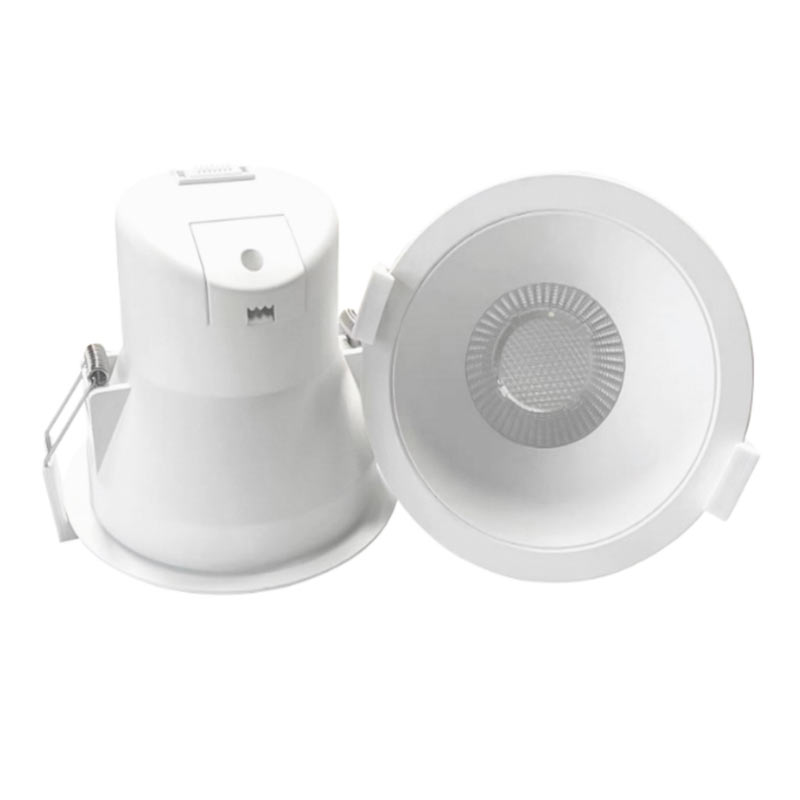
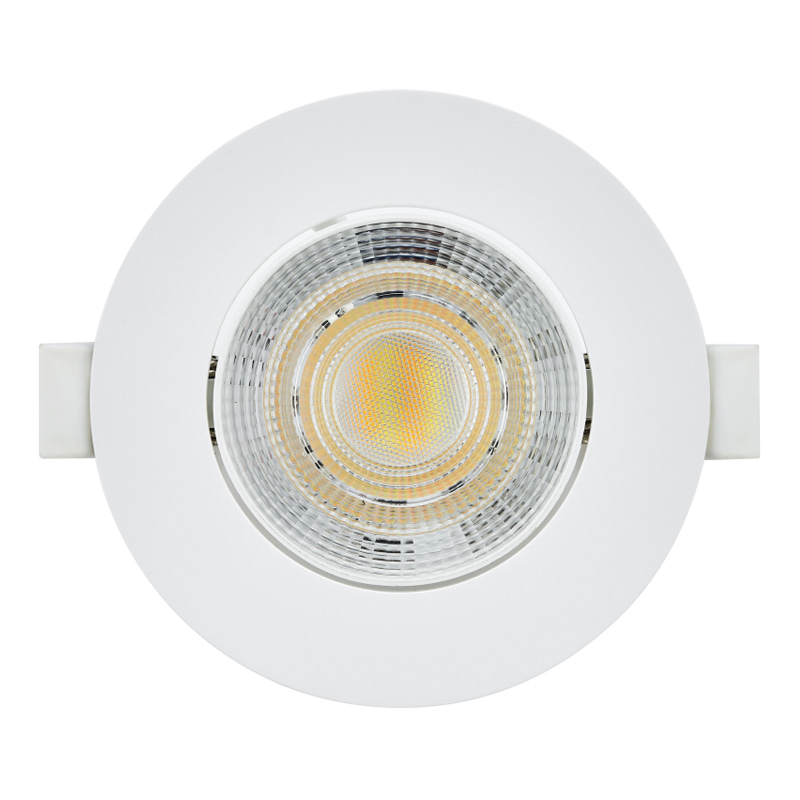
- Recessed Light — A housing type installed flush into a ceiling or wall cavity. It is not a lighting style on its own — it describes where the fixture sits. A recessed light can be fitted with a downlight trim or a spotlight trim depending on the intended use.
In practice, most LED downlights are recessed. But not all recessed lights are downlights — and that distinction matters enormously when planning a lighting scheme.
What Is an LED Downlight? Key Characteristics Explained
An LED downlight — sometimes called a can light or pot light — sits flush or semi-flush with the ceiling and casts light in a wide downward cone. The LED light source replaces older incandescent or halogen bulbs, delivering the same or better lumen output at 75–80% lower energy consumption.
Typical Specifications
- Wattage: 6W–20W (replacing 50W–100W halogen equivalents)
- Lumen output: 400–1,500 lm depending on size and application
- Beam angle: 90°–120° for standard ambient models; some wide-angle models reach 160°
- Color temperature range: 2700K (warm white) to 6500K (daylight), most commonly sold at 3000K or 4000K
- CRI (Color Rendering Index): 80–95+; higher CRI means colors appear more natural under the light
- Lifespan: 25,000–50,000 hours, compared to 2,000 hours for halogen
Best Rooms for LED Downlights
LED downlights excel in spaces where you need uniform, shadow-free coverage. The general rule: space downlights at intervals equal to half the ceiling height. For a 2.7m (9ft) ceiling, place fixtures approximately 1.3–1.5m apart.
- Kitchens — even task lighting across countertops and work surfaces
- Bathrooms — moisture-rated (IP44 or IP65) downlights over vanity and shower zones
- Living rooms — as a base layer of ambient light, layered with floor lamps and pendants
- Hallways and corridors — consistent illumination without shadows
- Office spaces — low-glare, high-CRI downlights reduce eye strain over workstations
What Is a Spotlight? When Narrow Beam Matters
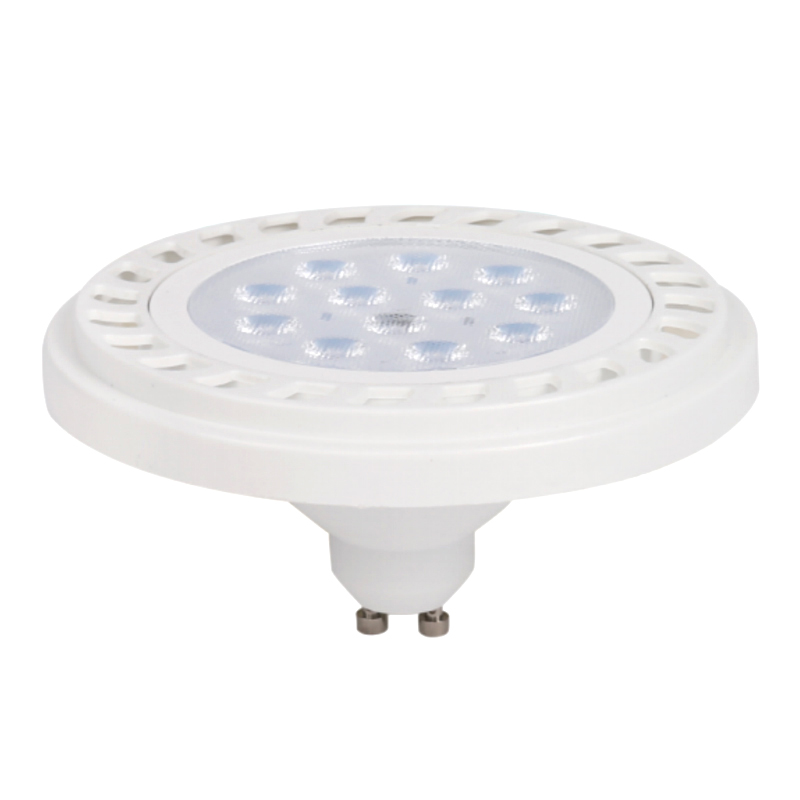
A spotlight is defined by its beam angle — typically 15° to 45° — which concentrates light onto a small target area. The same wattage that spreads 120° as a downlight produces dramatically more intense illumination when focused into a 25° spot beam. This makes spotlights ideal for accent lighting: drawing attention to artwork, shelving, architectural details, or retail displays.
Spotlight Mounting Types
- Track spotlights — Mounted on a ceiling track; individually adjustable and repositionable without rewiring. Common in galleries, retail, and kitchen islands.
- Recessed adjustable spotlights — Installed in a recessed housing but with a tiltable head, typically adjustable up to 30°–35° from vertical. Flush finish with directional capability.
- Surface-mounted spotlights — Fixed directly to a ceiling or wall surface. Easier to install but more visible than recessed options.
- Wall wash spotlights — A variant with an asymmetric beam designed to graze light across a wall surface, revealing texture and creating visual depth.
Best Applications for Spotlights
- Highlighting artwork or photography on a wall — position the spotlight at a 30° angle from the wall to minimize glare on the frame glass
- Retail display cases and merchandise shelving — focused light increases perceived product value
- Accent lighting for architectural features such as exposed brick, columns, or niches
- Kitchen island pendant alternatives — track spotlights provide targeted task lighting without hanging fixtures
- Museum and exhibition lighting — high-CRI (95+) spotlights render artwork colors accurately
What Is a Recessed Light? Understanding the Housing
Recessed lighting refers to the installation method, not the light output type. A recessed fixture consists of two parts: the housing (the metal canister installed inside the ceiling cavity) and the trim (the visible insert that determines how the light is distributed). The same housing can accept different trim types to change the light from a wide flood to a narrow spot.
Common Recessed Trim Types
- Baffle trim — The most common type. Ribbed inner surface reduces glare. Used for general ambient lighting.
- Reflector trim — Smooth, mirrored interior maximizes light output. Brighter but can produce more glare than baffle trim.
- Eyeball / gimbal trim — The bulb head can be angled up to 35°, turning the recessed fixture into an adjustable spotlight.
- Wall wash trim — Half-shield deflects light toward one wall. Used to illuminate vertical surfaces or bookshelves.
- Pinhole trim — Very small opening creates an extremely narrow beam. Used in high-end accent lighting and museum applications.
IC vs. Non-IC Rated Housing
If the ceiling has insulation above it, you must use an IC-rated (Insulation Contact) housing. Non-IC housings require at least 3 inches of clearance from insulation to prevent overheating and fire risk. This is a code requirement in most countries, not just a recommendation. Most modern LED integrated downlights are IC-rated by default — always check the specification sheet before installing.
Side-by-Side Comparison: LED Downlight vs. Spotlight vs. Recessed Light
| Feature | LED Downlight | Spotlight | Recessed Light |
|---|---|---|---|
| Primary Purpose | General ambient lighting | Accent / task lighting | Housing type (either use) |
| Beam Angle | 90°–120° | 15°–45° | Depends on trim chosen |
| Directionality | Fixed downward | Adjustable (track or gimbal) | Fixed or adjustable |
| Typical Wattage | 6W–20W | 4W–15W | Varies by bulb/trim |
| Installation | Recessed into ceiling | Track, surface, or recessed | Flush into ceiling cavity |
| Aesthetic Result | Even, shadow-free coverage | Dramatic contrast, highlights | Clean ceiling line |
| Typical Cost (per unit) | $8–$35 | $15–$80 | $10–$60 (housing only) |
Beam Angle Explained: Why It Changes Everything
Beam angle is the single most important specification separating downlights from spotlights, and it is frequently ignored by buyers who focus only on wattage. A 10W LED spotlight at 25° produces a brighter, more intense pool of light than a 15W downlight at 120° — even though it uses less power — because the energy is concentrated rather than spread.
Here is a practical guide to beam angle selection:
| Beam Angle | Classification | Ideal Use Case | Ceiling Height |
|---|---|---|---|
| 10°–20° | Narrow Spot | Sculpture, small artwork, display cases | 3m+ (10ft+) |
| 25°–40° | Spot / Flood | Paintings, retail shelving, feature walls | 2.4m–3.5m |
| 60°–90° | Wide Flood | Task lighting, kitchen countertops | 2.4m–3m |
| 100°–120° | Ambient Downlight | General room lighting, hallways | 2.4m–3m |
| 120°–160° | Ultra-Wide | Low ceilings, bathroom vanities | 2.1m–2.7m |
Color Temperature: Choosing Between Warm, Neutral, and Cool White
Color temperature — measured in Kelvin (K) — affects the mood and functionality of a space as much as the fixture type. This applies equally to downlights and spotlights.
- 2700K (Warm White) — Amber-toned, similar to incandescent. Best for bedrooms, living rooms, and restaurants where a relaxed, cozy atmosphere is the goal.
- 3000K (Soft White) — Slightly warmer than neutral. The most versatile choice for residential spaces — works well in kitchens, bathrooms, and hallways without feeling clinical.
- 4000K (Cool White / Neutral) — Crisp, neutral light. Preferred for offices, retail stores, and kitchens where task performance matters more than atmosphere.
- 5000K–6500K (Daylight) — Blue-white, high-alert light. Used in garages, workshops, commercial kitchens, and medical spaces. Generally too harsh for most residential applications.
Pro tip for spotlights: Art lighting and retail display benefit from a CRI of 95+ at 3000K — the warm tone enriches skin tones and warm-colored artwork, while the high CRI ensures accurate color rendering. Avoid going above 4000K for any accent lighting application unless specifically required.
Room-by-Room Guide: Which Fixture Type to Use
Kitchen
Use LED downlights as the primary ambient layer spaced evenly across the ceiling (approximately 1.2m apart for a 2.7m ceiling). Add recessed adjustable spotlights or track spotlights directly above the countertop to eliminate shadows during food prep. Avoid placing a single downlight directly above the cook — this casts a shadow from their own body onto the work surface.
Living Room
A living room benefits from layered lighting. Use dimmable LED downlights at 2700K–3000K for general ambience, set back from walls by at least 800mm to avoid hot spots on the ceiling perimeter. Add wall wash spotlights or adjustable recessed spotlights to highlight a feature wall, fireplace, or artwork collection. Layer with floor lamps for a residential feel that downlights alone cannot achieve.
Bathroom
Use IP44-rated LED downlights for the main zone and IP65-rated fixtures directly above or within 600mm of the shower or bath (Zone 1 in most wiring regulations). Avoid placing downlights directly above the mirror — this creates unflattering downward shadows on the face. Instead, use vertical wall lights or a backlit mirror at eye level for vanity tasks.
Home Office
Choose 4000K LED downlights with a UGR (Unified Glare Rating) below 19 to reduce screen glare and eye strain. Position fixtures to the sides of the desk rather than directly above — overhead lighting at a workstation increases screen reflection. Supplement with a directional spotlight or adjustable recessed fixture over a reading chair or reference bookshelf.
Retail Store or Gallery
Track spotlights are the industry standard for retail and gallery environments because merchandise and artwork change positions regularly. Track systems allow repositioning without any rewiring. Use high-CRI (95+) LED spotlights at 3000K for clothing and lifestyle products, or 3500K–4000K for electronics and technical products. Studies show that well-lit retail displays can increase perceived product quality and purchasing likelihood by up to 30%, making spotlight investment directly measurable in commercial ROI.
Common Mistakes to Avoid When Choosing Between These Fixtures
- Over-installing downlights — More fixtures do not always mean better lighting. Exceeding the recommended spacing creates a "spotty" ceiling full of bright circles rather than even ambient light. Calculate lumen requirements for the room size first, then determine fixture count.
- Using spotlights for general lighting — A room lit only by narrow-beam spotlights creates harsh contrast and deep shadows. Spotlights must always be layered over a base of ambient lighting, not used as the sole source.
- Mixing color temperatures — Combining 2700K downlights with 4000K spotlights in the same space creates a visually unsettling environment. Stick to one color temperature per zone, or one per room if the room is open-plan.
- Ignoring dimmability — Not all LED downlights are dimmable, and not all dimmers are compatible with LEDs. Always verify both the fixture and the dimmer switch are rated for LED use. Incompatible combinations cause flickering, buzzing, and reduced LED lifespan.
- Choosing wattage over lumens — Wattage measures energy consumption; lumens measure actual light output. Two 10W downlights from different manufacturers can produce 650 lm and 950 lm respectively. Always compare lumen output, not wattage, when evaluating brightness.
- Skipping IP ratings in wet areas — A standard LED downlight installed in a bathroom shower zone without the correct IP rating is both a safety hazard and a code violation. Always check the zone requirements for your region before purchasing.
Quick Decision Guide: Which One Do You Actually Need?
Use this checklist to make your decision in under two minutes:
- You need to light a whole room evenly → LED Downlight
- You want to draw attention to a specific object or wall → Spotlight
- You want a clean ceiling with no visible fixture → Recessed Light (with downlight or spotlight trim)
- You want flexibility to reposition lights later → Track Spotlight System
- You are lighting a bathroom shower zone → IP65 LED Downlight
- You are lighting a retail store or gallery → High-CRI Track Spotlights
- You want both ambient and accent in one room → LED Downlights + Adjustable Recessed Spotlights, layered
The most effective residential lighting schemes almost always combine all three concepts: recessed downlights for the ambient base, adjustable spotlights for accent layers, and the recessed housing format to keep ceilings clean and uncluttered. Understanding what each term actually describes — light distribution, directionality, and installation method — gives you full control over how any space looks and feels.
