
 English
 中文简体
 عربى
 Español

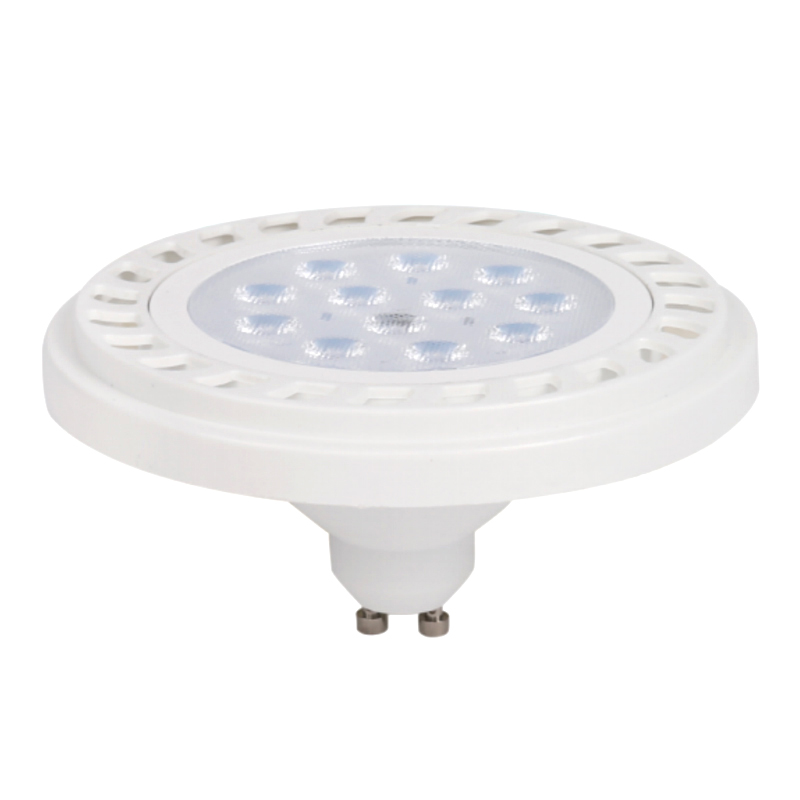
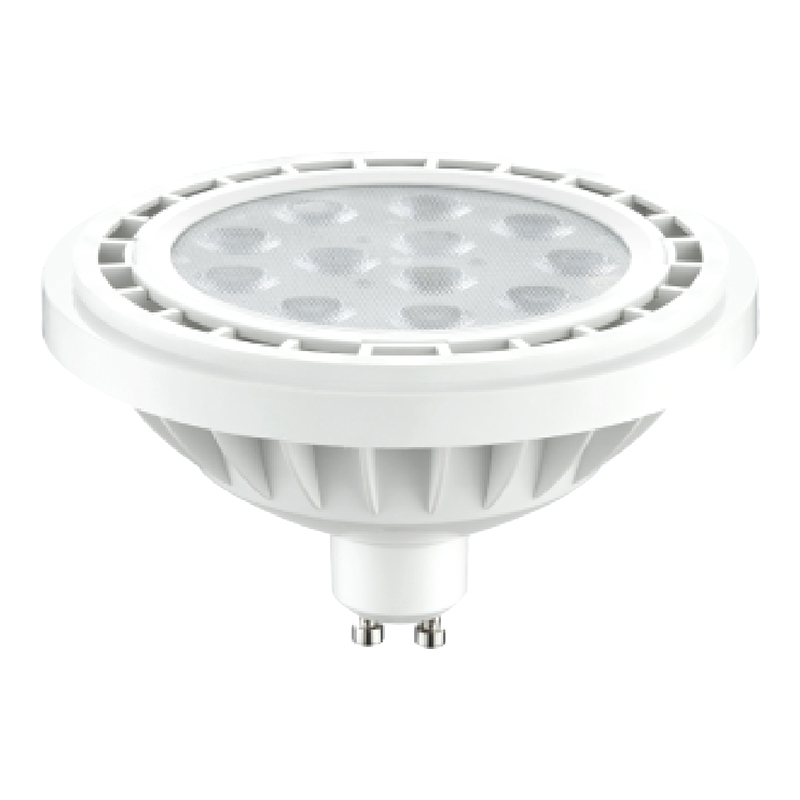
Introduction to LED Ceiling Lights LED ceiling lights have become a popular choice for modern homes,...
Content
- 1 Why Bathroom Mirror Lighting Needs Its Own Plan
- 2 What Is Actually Inside a Good Mirror Light
- 3 The Specification Sheet: Values Worth Locking Down
- 4 Four Ways to Light a Mirror
- 5 Colour Temperature and Dimming: Getting the Glow Right
- 6 Moisture, Safety and the Zone Rules That Actually Apply
- 7 Running Costs: Why the Numbers Favour LED
- 8 Sourcing Mirror Lighting: Notes for Buyers and Specifiers
- 9 Installation and Commissioning, Step by Step
- 10 Frequently Asked Questions
- 10.1 How many lumens do I need over a bathroom mirror?
- 10.2 Can I just use a normal LED bulb above the mirror?
- 10.3 Is IP44 enough above a sink?
- 10.4 Why does my dimmable mirror light flicker at low settings?
- 10.5 3000 K or 4000 K for a bathroom mirror?
- 10.6 Should the light be built into the mirror or mounted around it?
A mirror tells the truth only when the light around it does. In most bathrooms we are asked to look at, there is plenty of general illumination and almost none of it aimed at a face: one ceiling fitting placed behind the viewer, a shadow across the jaw, a bright hotspot on the forehead. Switching to a dedicated bathroom mirror lights LED scheme fixes that, and it is one of the least disruptive upgrades a bathroom can take, because the wiring is usually already near the basin and the fixture itself is small.
We have been building LED fixtures for export for more than a decade, and the questions buyers ask about mirror lighting rarely change. They want a face that looks natural, a fitting that survives steam, and a line on a specification sheet they can defend to a client. This guide walks through all three, in the order the decisions actually happen.
Why Bathroom Mirror Lighting Needs Its Own Plan
General lighting and task lighting are different jobs. A ceiling fitting delivers horizontal illuminance to the floor; a mirror light delivers vertical illuminance to a face. Those two quantities are not interchangeable, and a room can measure well on paper while still leaving a person shaving in their own shadow.
Direction matters more than raw output. Light that arrives from directly above the mirror pushes shadows down under the nose and brow. Light that arrives from both sides of the mirror, at roughly eye height, flattens those shadows and makes skin look like skin. That is why paired vertical strips and symmetrical side sconces outperform a single bright spot almost every time, even at lower wattage.
Finally, the fixture has to live in a wet room. Steam cycling between 30 and 40 degrees Celsius, splashes of soapy water, and cleaning agents are all part of the operating environment. An attractive luminaire with a poorly sealed driver will fog from the inside out within two heating seasons.
Targets worth writing into the brief
- 300 to 500 lux measured vertically at the face, at basin height
- Colour rendering index of 90 or higher, with R9 above 50
- 3000 K or 4000 K, ideally switchable on site
- IP44 as a floor, IP65 where spray reaches the fitting
- No visible LED dots or hotspot in the reflection
What Is Actually Inside a Good Mirror Light
The light engine and the diffuser
Most mirror luminaires are SMD strips on an aluminium-backed board, hidden behind an opal acrylic or polycarbonate cover. A back-lit opal panel gives the most even wash; an edge-lit frame around a glass or acrylic body is thinner and more architectural, but loses efficiency through the light guide and needs careful LED spacing. If the diffuser is thin and the diodes sit close together, you will see individual dots in the reflection, which is the single most common complaint we hear after a cheap installation.
Driver and thermal path
LEDs sealed inside a mirror body get hot, and a hot LED drifts in colour while losing output. Remote drivers, or drivers in a ventilated pocket, are the safer engineering choice. A metal-backed housing does double duty: it spreads heat and it gives the fixture rigidity, which matters when the body is over a metre long and only fixed at two points.
Colour rendering
High CRI is not a marketing extra in a bathroom. It is the difference between a face that looks healthy and one that looks grey. Ask for binning data, not just a headline number.
Switching and sensing
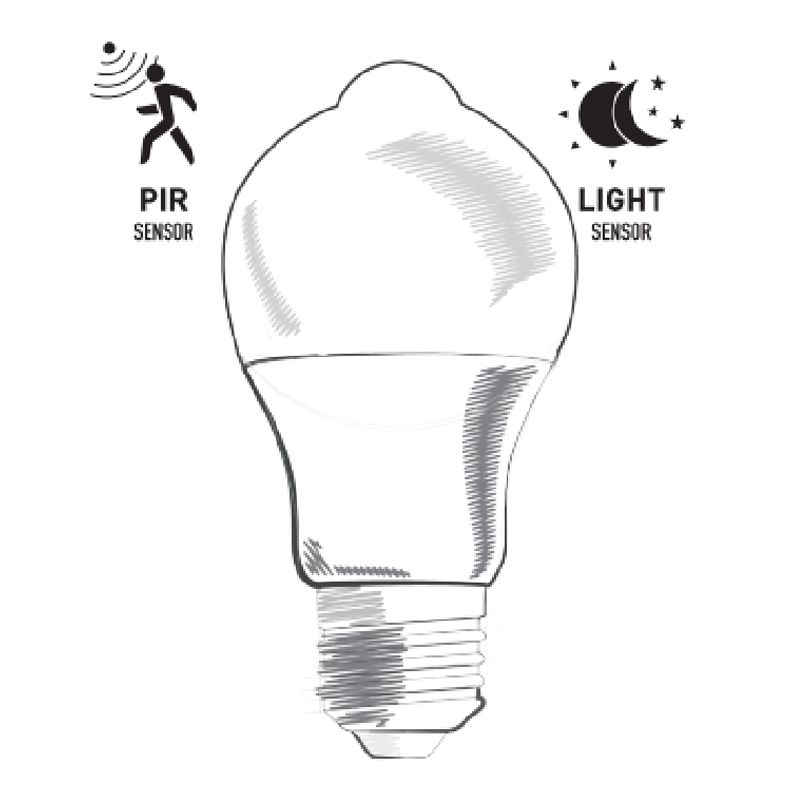
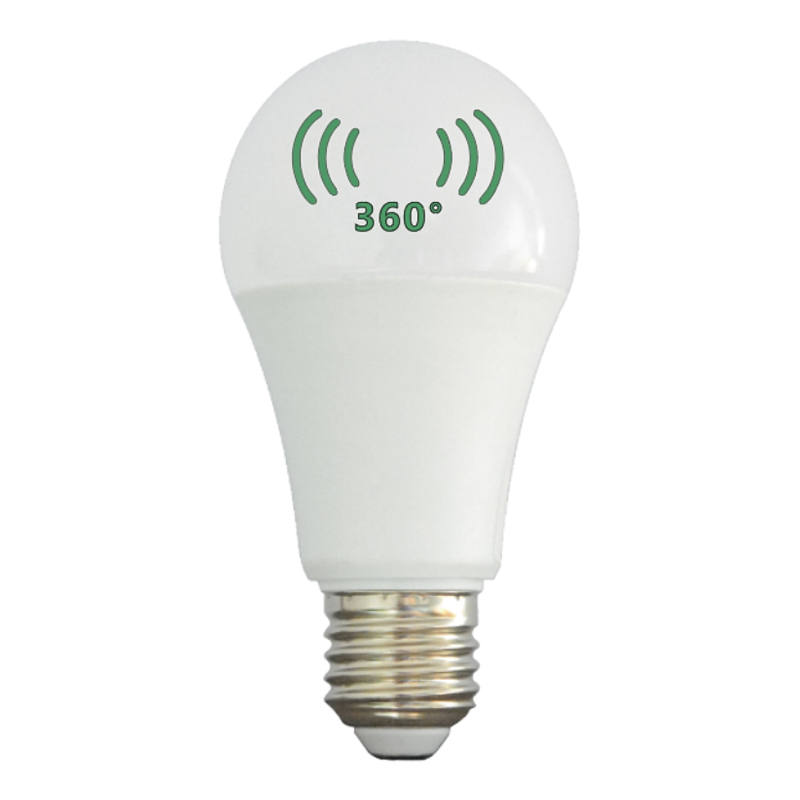
TRIAC dimming keeps guests and residents comfortable at night. For cabinets and alcoves, sensor bulbs that switch on presence are often the tidier answer than another wall plate.
Housing, finish and corrosion
Plastic-aluminium hybrids and die-cast aluminium bodies hold up well in humid rooms; bare steel fittings near a basin will not. Chrome and polished finishes look sharp but show water marks, while matte white and brushed metal hide them. Where the mirror sits close to a shower, specify a coated or anodised surface rather than an untreated one.
The Specification Sheet: Values Worth Locking Down
Every project we quote eventually reduces to a short table. Fill this in before you ask for samples, and the sample round becomes a confirmation step instead of a negotiation.
| Parameter | Target | Why it matters |
|---|---|---|
| Illuminance at face | 300 to 500 lux vertical | Below roughly 200 lux, shadows dominate and grooming becomes guesswork |
| Colour rendering | CRI 90+, R9 50+ | Skin tone, makeup application and shaving accuracy all depend on it |
| Colour temperature | 3000 K or 4000 K, switchable preferred | Mixing warm ceiling light with a cold mirror reads as dingy |
| Ingress protection | IP44 minimum, IP65 in splash zones | Steam and spray attack seals, drivers and terminal blocks |
| Dimming | Flicker-free, TRIAC compatible driver | Poor dimming shows as banding on phone cameras and causes eye strain |
| Diffusion | Opal cover, no visible diode pitch | Point sources reflect straight back at the user |
The temptation is to treat this as a checklist for the supplier alone. In practice it is a shared document: the electrician uses the IP and dimming lines, the interior designer uses the CRI and colour temperature lines, and the buyer uses the diffusion line to reject a sample before it reaches a client.
Four Ways to Light a Mirror
1. A linear bar above the mirror
The most even and forgiving option. Mount the bar 60 to 90 cm above the counter so light reaches the face at a shallow angle instead of raining straight down. Keep the bar slightly wider than the mirror itself and the coverage will look deliberate rather than accidental.
2. Paired vertical sconces
Two fittings at eye height, one either side, are the closest thing to studio lighting in a domestic bathroom. They suit double-basin layouts and taller mirrors, but demand symmetry: mismatched heights are far more obvious than mismatched wattages.
3. An integrated edge-lit mirror
Cleanest of all, and the hardest to service. The driver usually lives in the mirror body, so specify a replaceable one and leave a service route. Frosted edges diffuse better than clear ones, which tend to produce a visible hot band at the perimeter.
4. Recessed downlights above the basin
Cheapest to retrofit and the easiest to get wrong. A narrow-beam downlight directly over the mirror puts a bright patch on the forehead and deepens shadows everywhere else. If you go this route, use a wider beam and pull the fitting forward, toward the room.
Colour Temperature and Dimming: Getting the Glow Right
Colour temperature is where most mirror projects quietly fail. A 6000 K strip in a room lit by 2700 K ceiling lamps produces two competing whites, and the eye reads the colder one as clinical and the warmer one as yellow. The chart below shows how warmth falls away as Kelvin rises; most residential bathrooms sit comfortably in the upper half.
Switchable colour temperature removes the argument entirely. A three-step CCT fitting lets the installer choose 3000 K for a hotel bathroom and 4000 K for a hair station in the same building, from one stock item. The same logic applies to wattage: a fixture with selectable output covers a small en-suite basin and a generous vanity run without doubling the SKU count in a warehouse.
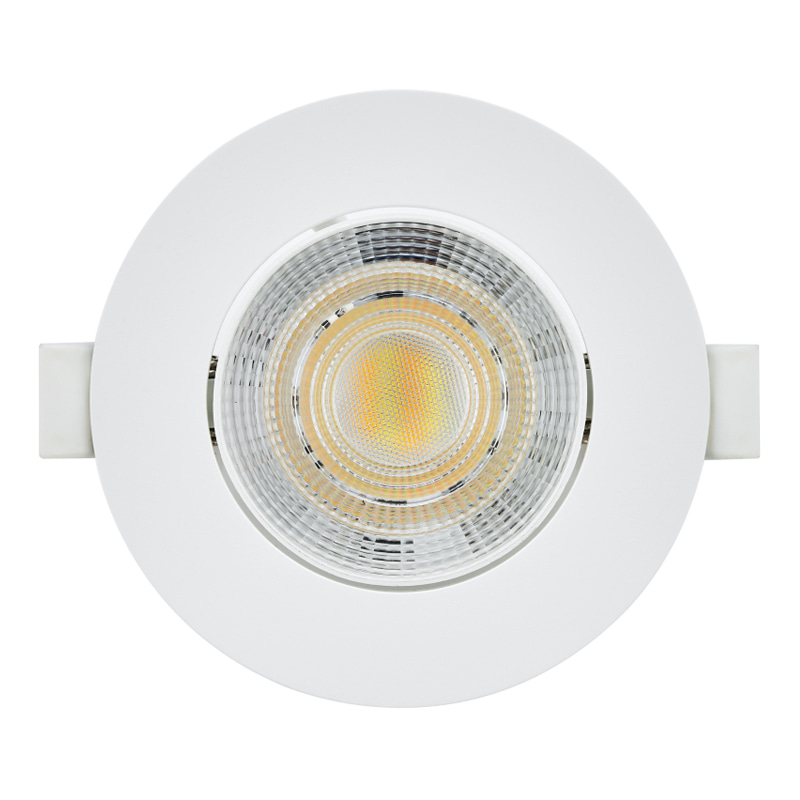 3CCT and Wattage Selectable LED Downlight DL-3CCT-9IN1This recessed downlight combines dial-selectable wattage and CCT with TRIAC or 0–10V dimming options, reducing stock variants for hospitality and commercial projects.View Product →
Dimming deserves equal attention. Most mirror strips are dimmed from a wall plate, which means the driver has to be genuinely TRIAC compatible rather than merely described as dimmable. A driver that cuts out below 20 percent looks fine on a data sheet and terrible in a guest bathroom at two in the morning. Test the bottom of the range, not the top: flicker and drop-out live at the low end.
Moisture, Safety and the Zone Rules That Actually Apply
Bathroom electrical safety is organised around zones, defined by distance from the water source rather than by how wet the room feels. The exact boundaries come from local regulation, but the principle is consistent: the closer to a bath or shower, the higher the required protection and the fewer the permitted fitting types.
Inside the bath or shower
Highest protection required. Only low-voltage or specifically rated fittings belong here. Mirror lights are rarely installed in this zone, and should not be unless the design clearly permits it.
Immediately around the water
IP65 territory. Splash reaches this area directly. Any recessed fitting, mirror bar or socket within the boundary needs sealed construction, a gasketed bezel and a driver rated for damp locations.
The rest of the bathroom
IP44 as a sensible floor. Beyond the splash boundary the risk drops, but steam does not respect lines on a drawing. Double-insulated Class II construction and RCD protection should be assumed.
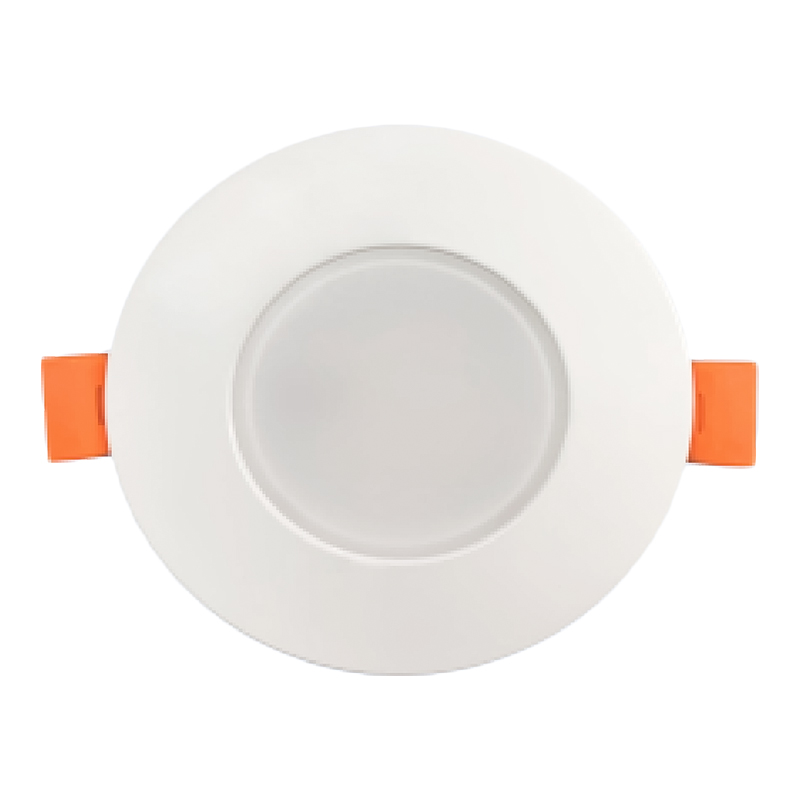 IP65 3CCT LED Downlight in 5W and 7WA recessed IP65 downlight with selectable 3000K/4000K/5000K CCT and 5W or 7W models for bathrooms, covered outdoor areas and other damp-prone interiors.View Product →
Three practical points are worth repeating to any installer. First, put the driver where air can move; a sealed ceiling void above a shower is the worst possible home for it. Second, seal the cable entry properly, because most water ingress happens through the hole someone drilled in a hurry. Third, remember that recessed housings sit inside the insulated envelope of the ceiling, so thermal derating is not theoretical. Our own note on the safety and regulatory side of recessed downlight housings covers the installation side of this in more detail.
Running Costs: Why the Numbers Favour LED
The financial case for mirror lighting is straightforward once you stop comparing fixtures and start comparing the hours they run. A mirror light is used intensively for short bursts, maybe three hours a day across a household, which adds up to roughly 1,100 hours a year.
60 W
typical incandescent mirror fitting
12 W
equivalent LED strip output
65 kWh
annual draw of the old fitting
13 kWh
annual draw of the LED replacement
That is around 80 percent less energy for the same task illumination, before counting the maintenance saving. Incandescent and halogen lamps in a humid bathroom also fail early, so the replacement cycle is short and usually happens at inconvenient moments. A well-sealed LED fixture should outlast several lamp changes, and its colour will not shift toward yellow as it ages. In a hotel with two hundred rooms, the arithmetic stops being a footnote and becomes the whole business case.
Sourcing Mirror Lighting: Notes for Buyers and Specifiers
If you are buying mirror lighting rather than installing a single bathroom, the decisions shift from aesthetics to supply chain. We work as a direct manufacturer with OEM and ODM programmes, and roughly the same list of questions decides whether a project runs smoothly.
- Fix the platform before the finish. A 3CCT, wattage-selectable engine covers more of your range than three fixed SKUs, and it simplifies spare parts for a facility manager.
- Agree the driver early. Dimming protocol, driver location and replaceability should be settled before tooling, not after the first sample.
- Confirm the certification route. European and UK buyers need the relevant CE and UKCA declarations plus RoHS documentation; North American buyers usually need a different safety mark entirely. Getting this wrong is the most expensive kind of delay.
- Ask for the thermal design, not just the lumen figure. A body that cannot shed heat will lose output long before its rated life.
- Test a sample in a real bathroom. A photometric report cannot tell you how a diffuser behaves in a mirror reflection.
We have supplied lighting to customers across Europe, the Americas and Asia-Pacific for more than thirteen years, working to ISO 9001 quality controls and developing OEM and ODM designs from customer drawings or physical samples. If you are planning a mirror lighting range and want to talk through the engine, the IP rating and the packaging in one conversation, you are welcome to start a conversation with our team.
Linear bars and vanity runs
A batten format is often the most economical way to light a long vanity wall, and a three-step CCT version covers warm residential and neutral commercial specifications from a single line item.
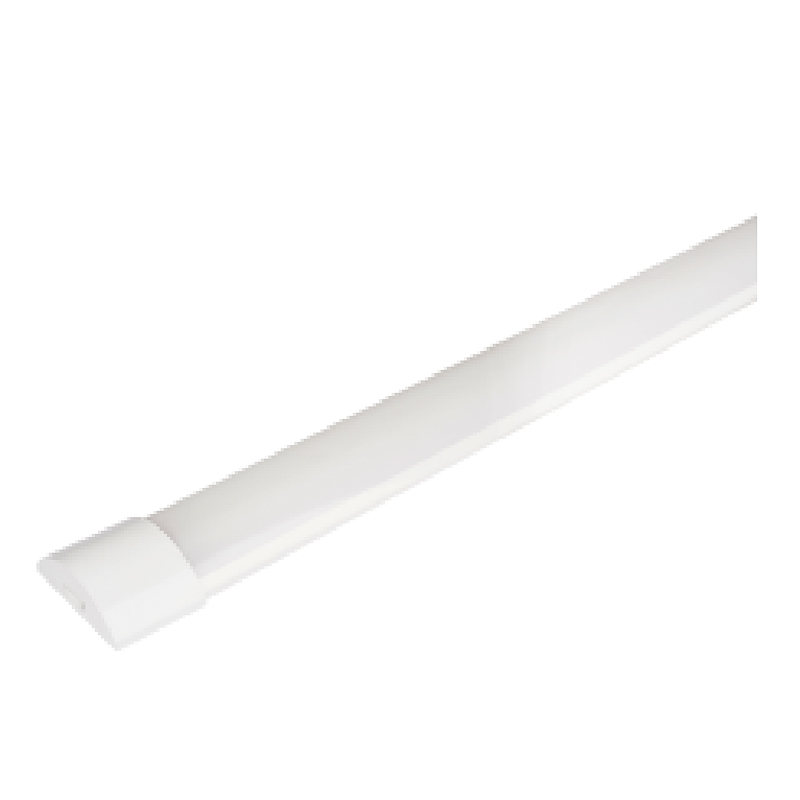 3CCT LED Batten Light for Vanity and Linear LightingA pre-wired batten in 9W to 48W models with 3000K/4000K/6500K selection, useful for long vanity walls and commercial linear lighting layouts.View Product →
Installation and Commissioning, Step by Step
- Plan the light before the mirror. Decide whether the mirror is lit from above, from the sides, or internally, because that choice determines the cable position and the back-box.
- Rough in at the right height. Side sconces centre near eye level; over-mirror bars sit 60 to 90 cm above the counter. Getting this wrong at first fix is the most common cause of a rework order.
- Check the driver location. Ventilated, accessible, and outside the splash zone. Label it on the drawing so nobody panels over it later.
- Hang a mock-up. Tape a cardboard template at the planned height and stand where a user would stand. It takes ten minutes and prevents most glare complaints.
- Install, seal and torque. Gaskets compressed evenly, cable entries sealed, terminals torqued to the manufacturer's figure rather than to feel.
- Commission the control. Dim from 100 percent down to the lowest setting and back, checking for flicker, drop-out and audible buzz. Do this in daylight and again at night; the second test is the one that matters.
Frequently Asked Questions
How many lumens do I need over a bathroom mirror?
Think in lux at the face rather than lumens at the fitting. Aim for 300 to 500 lux measured vertically at basin height. A 60 cm bar at roughly 1,000 to 1,500 lumens usually lands in that window for a single basin, but the mounting distance and diffusion matter as much as the output figure.
Can I just use a normal LED bulb above the mirror?
You can, and many retrofits do. The limit is diffusion and beam control: a bare bulb reflects straight back at the user and produces a hotspot. A frosted lamp behind an opal cover behaves far better than the same lamp exposed.
Is IP44 enough above a sink?
Usually yes, outside the splash boundary. If the mirror sits close to a shower or the fitting receives direct spray, move to IP65 and make sure the driver is rated for a damp location as well.
Why does my dimmable mirror light flicker at low settings?
Almost always a driver and dimmer mismatch. TRIAC dimmers vary in their minimum load and conduction behaviour, and a driver described as dimmable may still cut out below 20 percent. Test the low end with the exact dimmer specified for the project.
3000 K or 4000 K for a bathroom mirror?
3000 K reads warmer and flatters skin in a domestic setting. 4000 K is more neutral and is easier to defend in commercial or clinical spaces. If the project is mixed-use, a switchable three-step CCT fixture removes the risk of choosing wrong.
Should the light be built into the mirror or mounted around it?
Integrated lighting looks cleanest but is harder to service, so specify a replaceable driver. Surface-mounted bars and side sconces are simpler to maintain and easier to change later, which matters in rental and hospitality projects where the specification may evolve.
