
 English
 中文简体
中文简体 عربى
عربى Español
Introduction to LED Ceiling Lights LED ceiling lights have become a popular choice for modern homes,...
Content
In the rapidly evolving world of commercial and industrial lighting, the transition from traditional fluorescent lighting to energy-efficient LED technology is a standard move for reducing operational costs. However, a common dilemma arises during the procurement process: should you invest in Integrated LED Batten Lights or stick with the traditional LED Tube Fittings?
While both solutions serve as high-performance linear LED fixtures, they differ fundamentally in design, thermal management, and long-term maintenance philosophy. Understanding these differences is crucial for facility managers, electrical contractors, and business owners who want to maximize their Return on Investment (ROI) while ensuring optimal illumination in warehouses, car parks, and office corridors. This guide provides a deep dive into the technicalities of both systems.
Integrated LED Batten Lights: The Modern All-in-One Solution
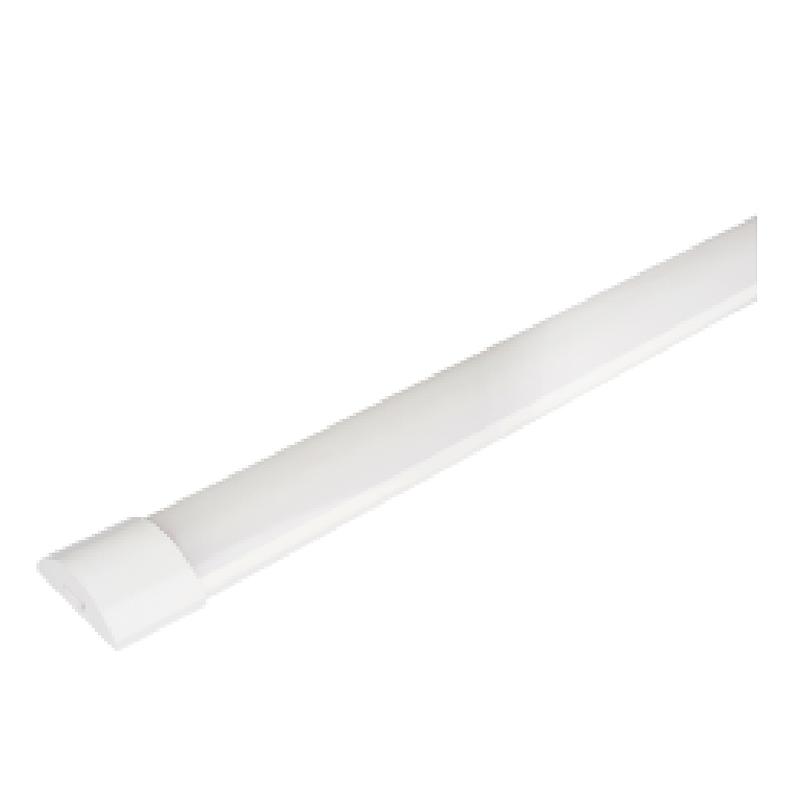
The integrated LED batten light represents the latest generation of linear lighting technology. Unlike traditional fixtures, the LED chips are mounted directly onto a specialized internal circuit board (SMD), which is then permanently fixed to the luminaire’s housing. This “all-in-one” design eliminates the need for separate bulbs and sockets, creating a streamlined, highly efficient light source.
Superior Thermal Management and Lifespan
One of the primary advantages of the integrated design is its thermal efficiency. In lighting, heat is the enemy of longevity. Because the LEDs are in direct contact with the aluminum body of the fixture, the entire housing acts as a large heat sink. This effective dissipation of heat ensures that the LED chips operate at a lower temperature, significantly extending the lifespan of the fixture—often exceeding 50,000 to 70,000 operating hours. This makes integrated units the preferred choice for high-ceiling warehouse lighting where frequent maintenance is difficult and costly.
Seamless Aesthetics and Slimline Design
Integrated battens offer a sleek, “slimline” profile that is aesthetically superior to bulkier tube-based fittings. This makes them ideal for modern architectural spaces, retail showrooms, and office environments. Furthermore, because there are no separate tubes, these fixtures do not suffer from “dark ends”—the shadowed areas at each end of a traditional tube fitting. The result is a continuous, uniform line of light that enhances visual comfort and reduces eye strain.
Smart Feature Integration (Sensors and Emergency)
The internal architecture of an integrated batten allows for much easier integration of “smart” technology. Most professional-grade units can be ordered with built-in microwave motion sensors or emergency battery backups housed within the fitting itself. This maintains the clean look of the fixture while providing essential safety and energy-saving functions. For projects requiring CCT (Color Correlated Temperature) switching, integrated battens often feature a simple switch that allows users to choose between 3000K, 4000K, and 6000K at the point of installation.
LED Tube Fittings: The Modular Retrofit Standard
LED tube fittings are essentially modern versions of the classic fluorescent batten. These fixtures consist of a housing (the fitting) and replaceable LED T8 or T5 tubes. This modular approach has remained popular due to its familiarity and the flexibility it offers in certain maintenance scenarios.
Flexibility and Maintenance Simplicity
The core strength of a tube-based system is its modularity. If a light source fails, a maintenance team can simply replace the T8 LED tube in seconds without needing an electrician to disconnect and replace the entire fixture. This makes it a pragmatic choice for facilities that have a large, aging infrastructure where “spot replacements” are common. It also allows for easy technology upgrades; if a more efficient LED tube is released next year, you can upgrade your lighting quality without changing the base fittings.
Lower Initial Capex and Retrofit Versatility
For businesses looking for a low-cost fluorescent tube replacement, LED tube fittings often represent the path of least resistance. In many cases, existing fluorescent housings can be converted to LED with a simple ballast bypass, saving the cost of new hardware. However, it is vital to remember that while the initial Capital Expenditure (CAPEX) may be lower, the shorter lifespan of the tubes compared to integrated units may result in higher Operational Expenditure (OPEX) over a five-to-ten-year period.
Comparative Technical Breakdown: Integrated vs. Tube Fittings
To help your engineering team make an evidence-based decision, we have summarized the technical differences in the table below:
| Feature | Integrated LED Batten | LED Tube Fitting (T8/T5) |
|---|---|---|
| Design Profile | Slimline, modern, compact | Traditional, bulkier housing |
| Heat Dissipation | Excellent (Full-body sink) | Moderate (Heat trapped in tube) |
| Maintenance | Replace whole unit | Replace tube only |
| Average Lifespan | 50,000+ Hours | 25,000 - 40,000 Hours |
| Uniformity | Seamless (No dark ends) | Potential “pixelation” or dark ends |
| IP Rating Capability | Often IP65/IP66 (Tri-proof) | Limited (Depends on housing) |
| Smart Options | Highly integrated (Internal) | Usually requires external modules |
Which Solution Offers Better Long-Term ROI for Your Facility?
Deciding between these two industrial lighting solutions depends on the specific demands of your environment. Whether you are lighting a sterile laboratory or a rugged underground car park, the “best” choice is the one that balances performance with total cost of ownership.
When to Specify Integrated LED Battens
Integrated battens are the “gold standard” for new construction and high-end renovation projects. They are particularly effective in IP65-rated “Tri-proof” applications (waterproof, dustproof, and corrosion-proof). If you are lighting a car wash, a food processing plant, or a cold storage facility, the sealed nature of an integrated unit prevents moisture and dust from entering the electronics, ensuring safety and reliability. They are also the best choice for offices and public spaces where a premium, high-end look is required to match modern interior design.
When to Choose LED Tube Fittings
Modular tube fittings remain a solid choice for back-of-house areas, utility rooms, and simple storage areas where aesthetics are secondary. They are also highly effective for projects with extremely tight initial budgets or for facilities that prefer to keep maintenance “in-house” without hiring external electrical contractors for every minor repair. If your site has a high risk of physical impact to the light source (e.g., certain workshops), the ability to cheaply replace a single tube instead of a whole fixture is a significant logistical advantage.
Energy Efficiency and Luminous Efficacy
From an energy perspective, integrated LED battens usually offer higher luminous efficacy (measured in Lumens per Watt). Because the LEDs are not shielded by a second layer of glass or plastic (the tube casing), more light reaches the floor. Typical integrated battens can reach 130–160 lm/W, whereas many LED tubes hover around 100–120 lm/W. Over a decade of operation, this 20%–30% difference in efficiency can result in substantial savings on energy bills, often paying for the higher initial cost of the integrated unit within the first two years.
FAQ: Frequently Asked Questions about LED Battens
Q1: Are integrated LED battens more expensive to install?
A: Initial purchase price is often slightly higher than a basic tube fitting, but installation time is usually shorter as they are designed for quick-fit mounting and tool-less wiring.
Q2: What is a “Tri-proof” LED Batten?
A: It refers to a light that is Waterproof, Dustproof, and Corrosion-proof, typically with an IP65 or IP66 rating. Integrated battens are the most common form of Tri-proof lighting.
Q3: Can I replace the driver in an integrated LED batten?
A: In many professional-grade models, the driver is accessible and can be replaced by an electrician if it fails, saving you from replacing the entire luminaire.
Q4: Which is better for cold storage environments?
A: Integrated LED battens. Their sealed design prevents internal condensation, which is a major cause of failure in tube-based systems used in sub-zero temperatures.
References and Citations
- CIBSE (Chartered Institution of Building Services Engineers): SLL Lighting Guide 1: The Industrial Environment (2023 Update).
- IEC 60598-2-1: Luminaires - Particular requirements - Fixed general-purpose luminaires.
- CIE 121-1996: The Photometry and Goniophotometry of Luminaires.
- Energy Star Program Requirements: Product Specification for Luminaires (Eligibility for Integrated LED products).
