
 English
 中文简体
中文简体 عربى
عربى Español
Introduction to LED Ceiling Lights LED ceiling lights have become a popular choice for modern homes,...
Content
- 1 1. The Physics of Efficiency: Why LED Batten Lights Outperform Tubes
- 2 2. Crunching the Numbers: A Realistic Energy Savings Comparison
- 3 3. Beyond the Bill: Maintenance and Operational Longevity
- 4 4. Quality of Light: Productivity, Safety, and Aesthetics
- 5 FAQ: Frequently Asked Questions about LED Batten Lights
- 6 References and Citations
In the current commercial and industrial landscape, lighting costs often account for 30% to 50% of a building’s total energy consumption. With global energy prices on the rise, businesses are actively seeking more efficient alternatives. Traditional fluorescent tubes were once the standard for factories, garages, and offices, but with the maturation of LED Batten Light technology, the debate over energy efficiency has reached a definitive conclusion. By retrofitting old T8 or T5 fluorescent fixtures with modern LED battens, organizations can not only improve light quality but also drastically slash operational expenditures.
1. The Physics of Efficiency: Why LED Batten Lights Outperform Tubes
To understand why the LED Batten Light has become the energy-saving champion, we must examine the light-emitting technology and energy conversion rates behind it. This is not just a simple comparison of wattage; it is a comprehensive advancement in optical engineering.
The Direct Illumination Advantage
Traditional fluorescent tubes are gas-discharge lamps that emit light in a 360-degree radius. This means half of the light is directed upward and must be reflected back down by the fixture’s internal reflector. During this process, approximately 20% to 30% of the luminous efficacy is lost through absorption and scattering.
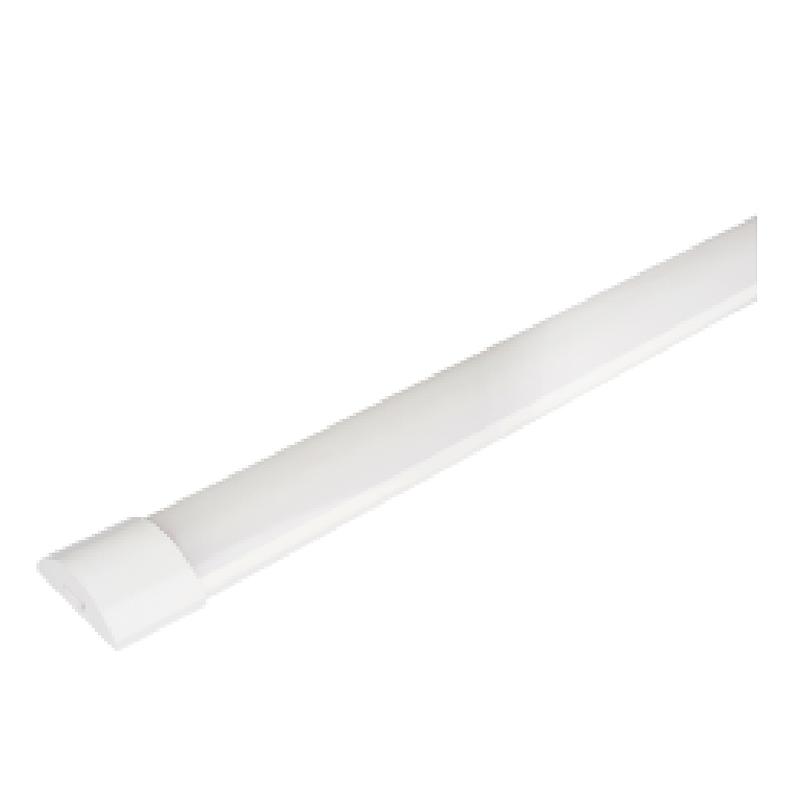
In contrast, the LED Batten Light utilizes a directional lighting design. LED chips are mounted directly onto an aluminum PCB, projecting light in a concentrated 120-degree to 180-degree downward beam. This ensures that almost 100% of the produced lumens reach the workspace. This directional characteristic allows a 20W LED batten to match or even exceed the effective illumination of a 40W traditional fluorescent tube.
Eliminating the Ballast Factor and Heat Loss
Fluorescent tubes rely on a ballast to regulate current. These ballasts are inherent energy drains; older magnetic ballasts can consume up to 15% of the lamp’s total power on their own. Furthermore, fluorescents convert a significant portion of electricity into heat rather than light. Modern LED battens use high-efficiency constant-current drivers with exceptional conversion rates and operate at much lower temperatures. This not only reduces the lighting bill but also indirectly lowers the load on HVAC systems during summer months, achieving “double energy savings.”
2. Crunching the Numbers: A Realistic Energy Savings Comparison
For financial decision-makers, data is more persuasive than theory. To demonstrate the economic benefits of the LED Batten Light, let’s look at a typical industrial workshop scenario. Assume this workshop has 100 twin-tube fluorescent fixtures and replaces them with modern 40W LED battens.
Annual Cost Analysis Table
| Performance Metric | Traditional Twin Fluorescent (2x36W) | Modern LED Batten Light (40W) |
|---|---|---|
| Total System Wattage (incl. ballast) | 82W | 40W |
| Daily Consumption | 0.984 kWh | 0.48 kWh |
| Annual Consumption | 359.16 kWh | 175.2 kWh |
| Annual Energy Cost (Per Unit) | $53.87 | $26.28 |
| Total Annual Cost (100 Units) | $5,387 | $2,628 |
| Rated Lifespan | 10,000 - 15,000 Hours | 50,000+ Hours |
| Environmental Impact | Contains Mercury / Hazardous | Mercury-Free / Recyclable |
The ROI and Payback Period
As the table illustrates, the LED Batten Light saves over 51% in electricity costs. For a facility with 100 lights, the direct annual saving is $2,759. Given that the procurement cost of LED battens has decreased significantly, the static payback period for most commercial projects is typically between 8 and 14 months. This means the energy savings will fully offset the installation costs in less than a year and a half, turning every subsequent year into pure profit.
3. Beyond the Bill: Maintenance and Operational Longevity
Energy savings are just the tip of the iceberg. In commercial operations, the “hidden cost” of maintenance is often a manager’s biggest headache. This is where LED technology offers another decisive advantage.
Drastically Reduced Maintenance Overhead
The average lifespan of a fluorescent tube is only about 10,000 hours, and they frequently suffer from significant lumen depreciation (dimming) and flickering toward the end of their life. In warehouses or high-ceiling workshops, replacing a tube often requires a scissor lift and two technicians, with labor costs often far exceeding the price of the tube itself.
The LED Batten Light is designed for a lifespan of over 50,000 hours. If operated for 10 hours a day, this translates to over 13 years of maintenance-free service. For large-scale facilities, this leads to a drastic reduction in maintenance budgets, allowing facility teams to focus on critical upgrades rather than constant bulb replacements.
Durability and “Tri-Proof” Features
Traditional fluorescent tubes are made of fragile glass and contain toxic mercury vapor. Modern LED battens are constructed from high-impact polycarbonate (PC) and extruded aluminum. Many high-standard LED battens feature “Tri-Proof” properties (waterproof, dustproof, and anti-corrosive) with an IP65 rating or higher. This enables them to operate reliably in harsh environments such as underground parking lots, car washes, or food processing plants, significantly extending the hardware’s life in grueling conditions.
4. Quality of Light: Productivity, Safety, and Aesthetics
Lighting is about more than just “seeing”; it is about creating a safe, high-efficiency work environment. The superior light quality of an LED Batten Light translates directly into employee productivity and improved corporate image.
High Color Rendering Index (CRI) and Safety
LED technology easily achieves a high Color Rendering Index (CRI > 80), which is vital for tasks requiring accurate color identification, such as electronics assembly, textile inspection, or retail displays. Accurate color rendering reduces eye strain and helps prevent industrial accidents caused by poor visibility. Furthermore, LED battens feature Instant-On capability, unlike fluorescents that require several seconds of flickering to warm up—a critical safety feature for emergency exit routes and immediate post-blackout recovery.
Versatile Designs: Slimline and Linear Aesthetics
From an aesthetic perspective, traditional fluorescent fixtures are often bulky and prone to collecting dust. LED Batten Lights offer sleek designs, ranging from ultra-compact Slimline LED Battens to modern linear lighting solutions. These fixtures provide uniform, shadow-free light and support seamless “linkable” connections to create visually appealing continuous runs. This clean, modern look elevates the professional appearance of offices or retail stores while reducing cleaning requirements due to their sealed designs.
FAQ: Frequently Asked Questions about LED Batten Lights
Q1: Does replacing fluorescent fixtures with LED battens require complex rewiring?
A: When replacing the entire fixture, it is usually a simple matter of connecting the power leads. Modern LED battens often feature quick-connect terminals, making installation up to 50% faster than traditional fixtures.
Q2: Can I choose different light colors for LED battens?
A: Yes. You can select Warm White (3000K for break areas), Natural White (4000K for offices), or Cool White (6000K-6500K for factories and garages).
Q3: Why is there such a large price gap between different LED battens?
A: Price differences usually stem from the brand of LED chips, the quality of the driver, and the thickness of the aluminum heat sink. High-quality fixtures guarantee a longer lifespan (5+ years warranty) and lower lumen depreciation.
References and Citations
- LightingEurope: “The Transition to LED: Guidelines for Commercial and Industrial Facilities” (2025).
- International Energy Agency (IEA): “Energy Efficiency Report - The Global Status of LED Lighting.”
- IESNA (Illuminating Engineering Society of North America): “Lighting Handbook, 11th Edition: Standards for Office and Industrial Environments.”
