
 English
 中文简体
中文简体 عربى
عربى Español
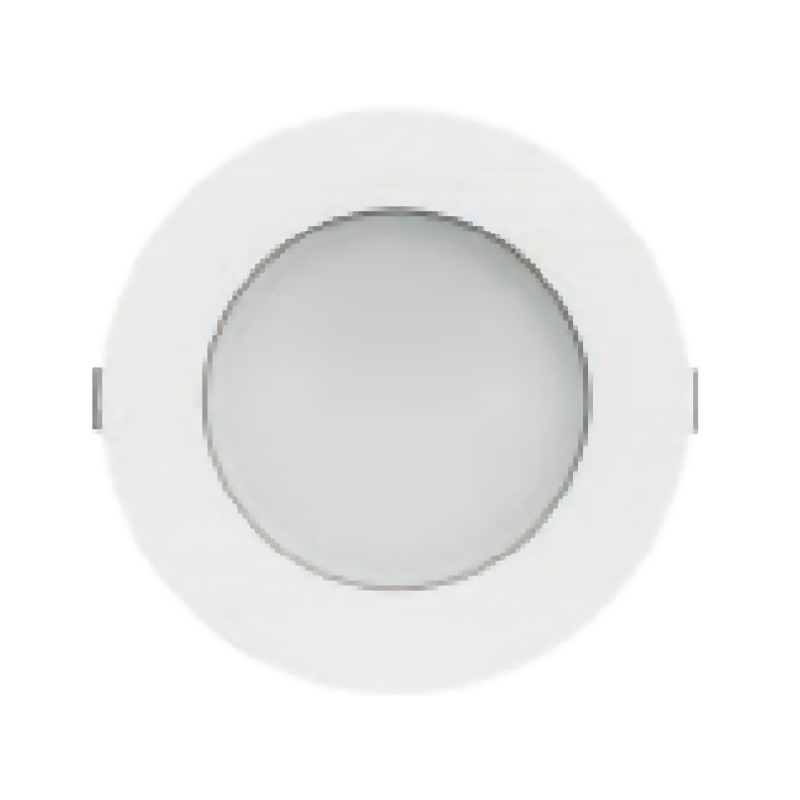
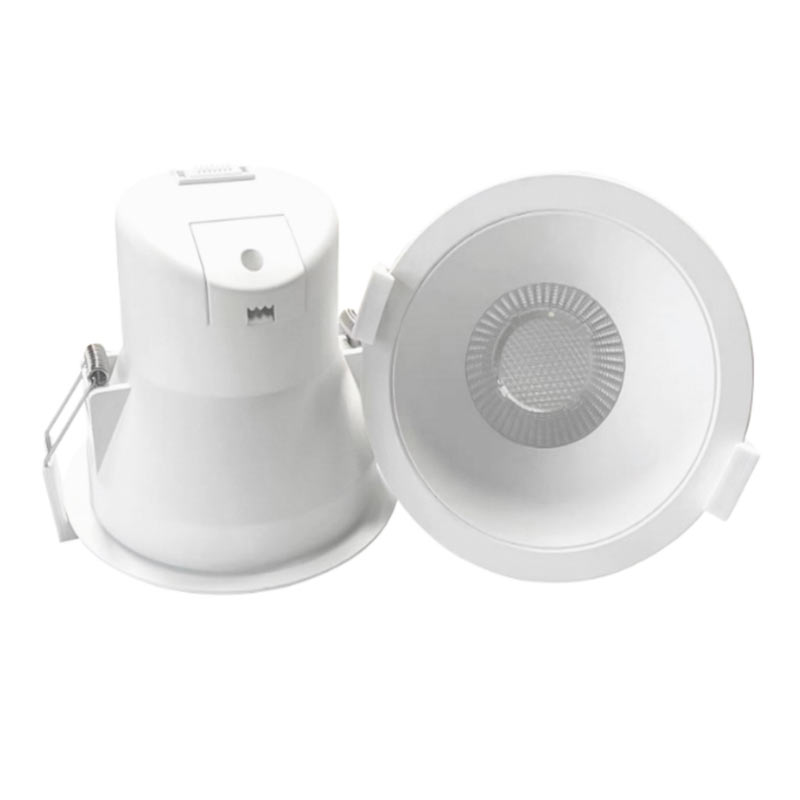
Introduction to LED Ceiling Lights LED ceiling lights have become a popular choice for modern homes,...
Content
- 1 The Quick Answer: Match Brightness, Color Temperature, and Beam Angle to Each Room's Purpose
- 2 Understanding the Key Specs Before You Buy
- 3 How Many Downlights Do You Need? The Spacing Formula
- 4 Living Room: Warm and Layered
- 5 Kitchen: Bright, Accurate, and Task-Focused
- 6 Bedroom: Soft, Dimmable, and Sleep-Friendly
- 7 Bathroom: Bright, Color-Accurate, and Moisture-Resistant
- 8 Home Office: Alert, Glare-Free, and Productivity-Oriented
- 9 Hallways and Stairways: Safe, Even, and Efficient
- 10 Room-by-Room Quick Reference
- 11 Fixed vs. Adjustable Downlights: When Does Tilt Matter?
- 12 Final Checklist Before You Purchase
The Quick Answer: Match Brightness, Color Temperature, and Beam Angle to Each Room's Purpose
Choosing the right LED downlight is not just about picking a wattage — the three variables that matter most are lumens (brightness), color temperature (CCT), and beam angle. Get these right for each room and you'll have lighting that feels natural, flattering, and functional. Get them wrong and even an expensive fitting will make a space feel cold, dim, or harsh. The sections below break this down room by room with specific numbers you can use immediately.
Understanding the Key Specs Before You Buy
Before diving into room-by-room recommendations, it helps to understand the four specs that appear on every LED downlight box — and what they actually mean for your home.
Lumens vs. Watts
Watts measure energy consumption, not brightness. Lumens measure actual light output. A modern LED downlight producing 800 lumens uses only 8–10W, whereas an old halogen producing the same 800 lumens consumed 60W. Always shop by lumens, not watts.
Color Temperature (CCT)
Measured in Kelvin (K), CCT describes whether light appears warm or cool. The common ranges are warm white (2700–3000K), neutral white (3500–4000K), and cool daylight (5000–6500K). Lower Kelvin = warmer, more amber light. Higher Kelvin = cooler, bluer light.
Beam Angle
Beam angle controls how wide or narrow the light spreads from the fitting. A narrow beam (25–40°) creates focused accent lighting; a wide beam (60–120°) spreads light across a larger floor area for general illumination. Most standard ceiling downlights use 60° for even coverage.
CRI (Color Rendering Index)
CRI measures how accurately a light source renders colors compared to natural daylight (scored out of 100). A CRI of 80+ is acceptable for most rooms; 90+ is recommended for kitchens, bathrooms, and any space where color accuracy matters — such as applying makeup or cooking with fresh produce.
| Spec | What It Affects | Recommended Range |
|---|---|---|
| Lumens | Overall brightness | 400–1,000 lm per fitting |
| CCT (Kelvin) | Warm vs. cool feel | 2700K–5000K depending on room |
| Beam Angle | Spread vs. focus | 60° general / 25–38° accent |
| CRI | Color accuracy | 80+ minimum / 90+ preferred |
How Many Downlights Do You Need? The Spacing Formula
A common rule of thumb: divide your ceiling height (in meters) by 2 to get the ideal spacing between downlights. For a standard 2.4m ceiling, space fittings approximately 1.2m apart. For perimeter placement, position the first fitting about 0.6m from the wall.
For overall lumen planning, aim for roughly 300–500 lumens per square meter for living areas and kitchens, and 150–250 lumens per square meter for bedrooms and hallways. A 20m² open-plan kitchen-living area therefore needs approximately 6,000–10,000 total lumens — achievable with eight to ten 800-lumen downlights.
Living Room: Warm and Layered
The living room is used for relaxation, conversation, and entertainment — all activities that benefit from warm, flattering light rather than bright, clinical illumination.
- CCT: 2700–3000K (warm white) for a cozy, inviting feel.
- Lumens per fitting: 500–700 lm; use dimmable fittings to adjust for different moods.
- Beam angle: 60° for general fill; add 38° narrow-beam fittings to accent artwork or shelving.
- Dimmability: Essential — pair with a trailing-edge dimmer switch for flicker-free performance.
- CRI: 90+ if you have artwork, plants, or richly colored soft furnishings you want to look their best.
Example: A 16m² living room with a 2.4m ceiling typically needs 6–8 dimmable 600-lumen, 2700K downlights spaced 1.2m apart for even, comfortable coverage.
Kitchen: Bright, Accurate, and Task-Focused
Kitchens demand higher brightness and better color accuracy than any other room. Poor lighting over a chopping board or hob is a safety issue, not just an aesthetic one.
- CCT: 3500–4000K (neutral white) — bright enough for tasks without the harshness of cool daylight.
- Lumens per fitting: 700–1,000 lm for ceiling fittings over work surfaces.
- CRI: 90+ so food colors look natural — critical when checking if meat is cooked or produce is fresh.
- IP rating: Use IP65-rated downlights within 0.5m of a sink to meet electrical safety standards.
- Placement: Position fittings directly above the countertop edge (not behind you) to avoid casting shadows while working.
Bedroom: Soft, Dimmable, and Sleep-Friendly
The bedroom is where lighting has the greatest impact on wellbeing. Cool or bright light in the evening suppresses melatonin production, disrupting sleep. Warm, dimmable LED downlights are not just a comfort preference — they're a health recommendation.
- CCT: 2700K or lower — some premium fittings offer a "dim-to-warm" feature that shifts from 3000K at full brightness to 2200K when dimmed, mimicking candlelight.
- Lumens per fitting: 400–600 lm; fewer, softer fittings are better than many bright ones.
- Dimmability: Non-negotiable — you need full range from 100% for dressing and reading to 10% for winding down.
- Glare control: Choose fittings with a deep recessed housing or anti-glare baffle so you're not looking directly into a bright point when lying in bed.
Bathroom: Bright, Color-Accurate, and Moisture-Resistant
Bathroom lighting serves two very different needs: functional task lighting (shaving, applying makeup) and relaxing ambiance (bathing). The key technical requirement here is the IP rating.
- IP Rating: IP65 minimum for fittings within Zone 1 (directly above the bath or shower). IP44 is acceptable for Zone 2 (within 0.6m of the bath edge). Outside these zones, standard non-rated fittings are permitted.
- CCT: 3000–4000K — warm enough to feel relaxing, cool enough to accurately show skin tone for grooming tasks.
- CRI: 90+ is strongly recommended so makeup and skincare colors are represented accurately.
- Lumens: 700–900 lm per fitting for a small bathroom (under 6m²); two to three well-placed fittings are usually sufficient.
| Bathroom Zone | Location | Minimum IP Rating |
|---|---|---|
| Zone 0 | Inside the bath or shower | IP67 |
| Zone 1 | Directly above bath/shower up to 2.25m height | IP65 |
| Zone 2 | Within 0.6m of Zone 1 boundary | IP44 |
| Outside Zones | Rest of bathroom | No IP requirement |
Home Office: Alert, Glare-Free, and Productivity-Oriented
The home office requires lighting that promotes focus and reduces eye strain over long working hours. Both CCT and glare control matter significantly here.
- CCT: 4000–5000K (neutral to cool white) promotes alertness and reduces afternoon fatigue. Avoid going above 5000K as it can cause eye strain over long sessions.
- Lumens: 500–800 lm per fitting; the space should reach 300–500 lux at desk level, which you can measure with a free smartphone lux meter app.
- Glare control: Use fittings with a UGR (Unified Glare Rating) below 19 — this minimises reflected glare on screens and eye fatigue.
- Placement: Avoid positioning downlights directly in front of or behind a monitor — place them to the side to prevent screen reflections.
Hallways and Stairways: Safe, Even, and Efficient
Hallways and stairways are transitional spaces — the priority is safety and uniformity, not ambiance. Poorly lit stairs are a leading cause of home accidents.
- CCT: 3000–3500K — neutral enough to feel bright but not jarring when you enter from a dark exterior.
- Lumens: 400–600 lm per fitting is sufficient; evenly spaced fittings every 1.0–1.2m eliminate dark patches.
- Motion sensor compatibility: Consider PIR (passive infrared) sensor downlights for hallways — they save energy and are especially practical for nighttime trips without needing to find a switch.
- Beam angle: 60–90° wide beam to ensure the floor and walls are evenly lit, reducing trip hazards.
Room-by-Room Quick Reference
Use this table as a fast reference when specifying or purchasing LED downlights for each area of your home.
| Room | CCT (Kelvin) | Lumens / Fitting | CRI | Dimmable | IP Rating |
|---|---|---|---|---|---|
| Living Room | 2700–3000K | 500–700 lm | 90+ | Yes | IP20 |
| Kitchen | 3500–4000K | 700–1,000 lm | 90+ | Optional | IP65 near sink |
| Bedroom | 2700K | 400–600 lm | 80+ | Yes | IP20 |
| Bathroom | 3000–4000K | 700–900 lm | 90+ | Optional | IP65 (Zone 1) |
| Home Office | 4000–5000K | 500–800 lm | 80+ | Optional | IP20 |
| Hallway / Stairs | 3000–3500K | 400–600 lm | 80+ | Optional | IP20 |
Fixed vs. Adjustable Downlights: When Does Tilt Matter?
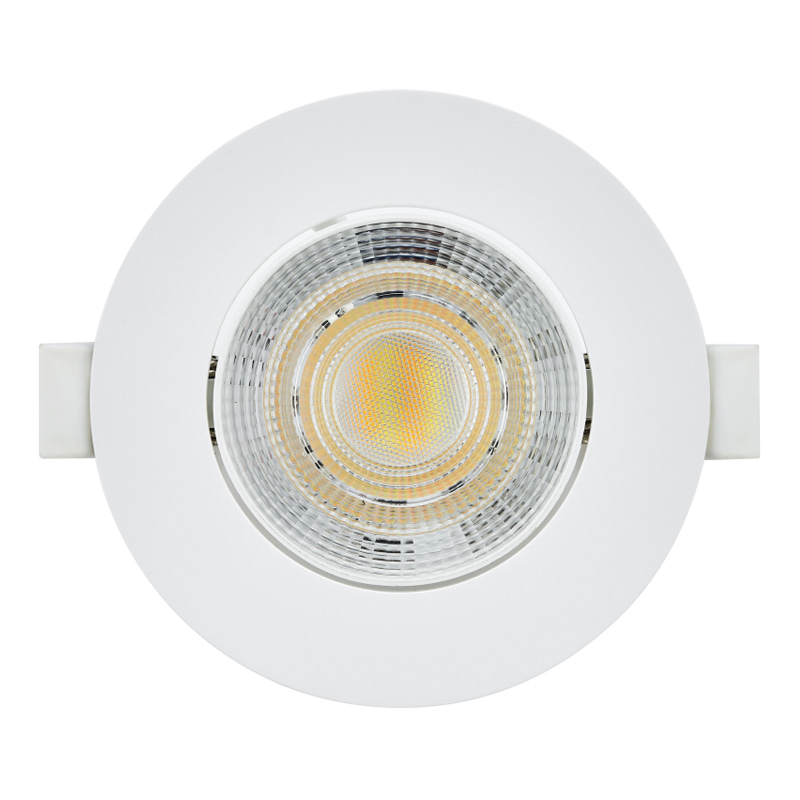
Most downlights are fixed — they point straight down. Adjustable (tiltable) downlights can be angled up to 30–40° to direct light at a specific object, such as a painting, a feature wall, or a kitchen countertop that sits away from the ceiling fitting above it.
- Use fixed downlights for general ambient lighting across bedrooms, hallways, and open-plan areas.
- Use adjustable downlights to highlight artwork, architectural features, retail displays, or anywhere you need directional accent lighting.
- Adjustable fittings typically cost 20–50% more than equivalent fixed fittings but provide significantly greater design flexibility.
Final Checklist Before You Purchase
Run through this checklist for each room before placing your order:
- Have you chosen the correct CCT for the room's primary purpose — relaxation, task work, or transition?
- Is the lumen output high enough for the room's area, or will the space feel dim?
- Do you need an IP65 rating for any fitting near a water source — kitchen sink, bathroom, or outdoor-adjacent ceiling?
- Are the fittings dimmable, and have you confirmed compatibility with your chosen dimmer switch brand?
- Is the CRI 90+ for any space where color accuracy matters — kitchen, bathroom, or dressing area?
- Does the cut-out size match your existing ceiling holes if you're retrofitting? Standard sizes are 70mm, 90mm, and 100mm.
Getting these six parameters right before purchasing will save you the cost and frustration of returning fittings, re-cutting ceiling holes, or living with lighting that never quite feels right. When in doubt, order a single sample fitting and live with it for a week before committing to a full room install.
