
 English
 中文简体
中文简体 عربى
عربى Español
Introduction to LED Ceiling Lights LED ceiling lights have become a popular choice for modern homes,...
Content
Quick Answer: What the Numbers Mean
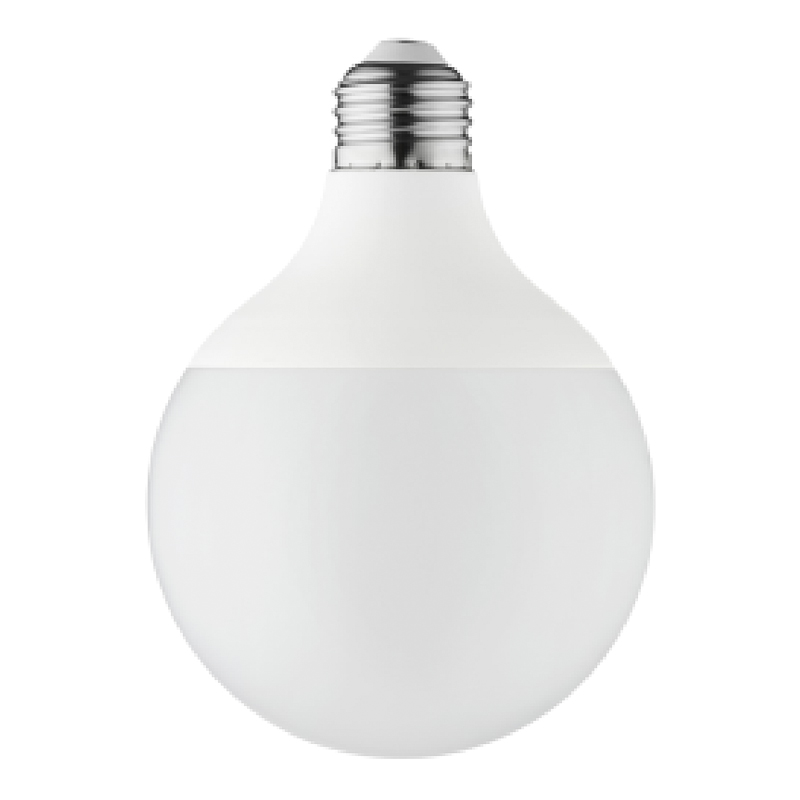
The "G" in an LED bulb name stands for "globe" (round-shaped bulb), and the number that follows indicates the bulb's diameter in eighths of an inch. For example, a G25 bulb measures 25/8 inches, or 3.125 inches, in diameter, while a G16.5 bulb measures 16.5/8 inches, or about 2.06 inches. This sizing system is standardized across the lighting industry, so a G25 from any manufacturer will have essentially the same diameter, even if wattage, brightness, and base type vary.
The most common sizes are G16.5 (vanity lighting), G25 (bathroom mirrors and pendant fixtures), G30 (decorative string lights and larger pendants), and G40 (patio and outdoor string lighting).
How the G-Number Sizing System Works
Bulb sizing in the United States follows a convention where the number after the shape letter refers to the bulb's maximum diameter measured in eighths of an inch. This same system applies to other bulb shapes too (A19, BR30, PAR20), not just globe bulbs, which is why understanding the math behind it is useful beyond just G-series bulbs.
To convert any G-number to inches, divide the number by 8. A G40, for instance, is 40/8 = 5 inches in diameter. This straightforward formula lets you quickly estimate physical size from the product name alone, without needing to check a spec sheet first.
Common G Bulb Sizes and Their Uses
The table below lists the most commonly available G bulb sizes, their exact diameters, and where each is typically used.
| Bulb Size | Diameter | Typical Use |
|---|---|---|
| G14 | 1.75 in | Small decorative fixtures |
| G16.5 | 2.06 in | Vanity/makeup mirror lighting |
| G25 | 3.13 in | Bathroom mirrors, pendants |
| G30 | 3.75 in | Decorative string lights, statement pendants |
| G40 | 5.00 in | Patio and outdoor string lighting |
G25 is the most commonly purchased size for household use, largely because it's the standard replacement size for the round bulbs found around bathroom vanity mirrors in most U.S. homes built after the mid-20th century.
Base Type: The Other Number to Check
Diameter isn't the only spec that matters — the base type determines whether the bulb will physically fit and electrically connect to your fixture.
E26 (Standard Base)
Most G25, G30, and G40 bulbs use an E26 medium screw base, the same standard base found on most household light bulbs in North America. This makes them compatible with standard sockets without an adapter.
E12 (Candelabra Base)
Smaller globe bulbs, particularly G14 and some G16.5 models, often use an E12 candelabra base, which is narrower and commonly found in decorative fixtures, chandeliers, and some vanity light strips. Always check the base type separately from the diameter number, since the same G-size can be sold with different base options.
How to Measure Your Existing Bulb
If you're replacing a bulb and don't know its size, measuring the old one directly is the most reliable method.
- Measure the bulb's diameter at its widest point using a ruler or calipers, in inches.
- Multiply that measurement by 8 to get the approximate G-number (e.g., a 3-inch diameter suggests a G24, close to the standard G25).
- Check the base by measuring its width: roughly 1 inch (26mm) indicates E26, while roughly 0.5 inch (12mm) indicates E12.
- Check for any printed markings on the old bulb's base or glass, which often include the exact size and base code.
Printed markings on the bulb itself are the most reliable source when available, since manual measurement can introduce small errors that lead to ordering the wrong size, particularly for bulbs that fall between standard size increments.
LED-Specific Considerations Beyond Size
Once you've confirmed the correct G-size and base type, a few LED-specific factors affect performance and compatibility.
- Check dimmer compatibility — not all LED G bulbs work with older incandescent dimmer switches, and mismatches can cause flickering
- Look at color temperature (measured in Kelvin), since warm white (2700-3000K) suits most vanity and ambient fixtures, while daylight (5000K+) suits task-oriented spaces
- Compare lumens rather than watts when replacing an old incandescent, since LED wattage is not directly comparable to incandescent wattage for brightness
- Confirm whether the bulb is rated for enclosed fixtures, which is especially relevant for globe bulbs often used in fully enclosed vanity or pendant housings
A general rule of thumb is that an LED bulb producing around 800 lumens is roughly equivalent to a 60-watt incandescent, which is a useful reference point when replacing older globe bulbs that only list incandescent wattage.
Quick Sizing Checklist
Before ordering replacement LED G bulbs, confirm the following:
- Have you measured or identified the correct G-number diameter for your fixture?
- Have you confirmed the base type (E26 or E12) separately from the diameter?
- Does the bulb's lumen output match your brightness needs, not just its wattage label?
- Is dimmer compatibility confirmed if your fixture uses a dimmer switch?
- Is the bulb rated appropriately if it will be used in an enclosed fixture?
Once you understand that the G-number is simply a diameter measurement in eighths of an inch, choosing the right replacement bulb becomes a quick matter of measuring and matching rather than guessing from a wall of similar-looking product listings.
