
 English
 中文简体
中文简体 عربى
عربى Español
Introduction to LED Ceiling Lights LED ceiling lights have become a popular choice for modern homes,...
Content
Same wattage, same fixture, but one room feels golden and the other feels clinical. The difference is not brightness; it is color temperature, which is measured in Kelvin (K). The rule is simple: lower K means warmer, more yellow light, while higher K means cooler, bluer light. Understanding that range solves most lighting decisions, whether you are outfitting a home, a retail counter, or a workspace.
What Color Temperature Really Means
Color temperature describes the color appearance of a light source by comparing it to a black body radiator heated to a certain temperature. At 2000K, the glow is deep amber, similar to candlelight. At 2700K, it is a soft warm white. At 4000K, the light turns neutral. At 6500K, it is a crisp daylight blue. The term "correlated color temperature" (CCT) is used because real LED sources do not perfectly follow the black body curve; the Kelvin value is an approximation of how they appear to the human eye.
The practical takeaway: do not memorize the physics. Remember that warm light creates intimacy and relaxation, cool light supports attention and clarity. Between those two poles, every space has its own sweet spot.
The Kelvin Scale at a Glance
The table below is not an absolute law—it is a starting point informed by how people typically respond to different light. Use it first, then refine with real samples.
| Kelvin Range | General Appearance | Common Applications | Considerations |
|---|---|---|---|
| 2700K | Soft warm white | Bedrooms, hotels, living rooms | Low alertness; emphasizes coziness |
| 3000K | Warm white | Restaurants, lobbies, homes | Flattering to skin tones |
| 3500K | Neutral white | Retail displays, schools | Mixed spaces where tasks and ambience coexist |
| 4000K | Cool white | Offices, workshops, bathrooms | High visual clarity; can feel austere at night |
| 5000K | Daylight | Retail stations, garages, classrooms | Strong contrast; may increase fatigue in wrong context |
| 6500K | Cool daylight | Medical, industrial outdoor | Blue-heavy; rarely comfortable for occupied interiors |
Beyond the Kelvin number, color rendering index (CRI) determines how true colors appear under that light. A 4000K light at CRI 80 can look flat; the same 4000K at CRI 90 reveals the subtle differences in fabrics, wood, and merchandise. A common trap is comparing fixtures online by the Kelvin value alone. In a real room, ceiling height, wall color, and floor reflectance all shape the result.
Matching Color Temperature to the Space
Start with the task the space serves. If the goal is relaxation, choose 2700K to 3000K. If the goal is precision, choose 4000K to 5000K. If the space serves both, a neutral 3500K to 4000K range is often the least risky choice.
Residential and Hospitality
Bedrooms, hotel corridors, and living rooms benefit from 2700K to 3000K. At these values, walls appear warm, shadows are soft, and people naturally calm down. A common mistake is using daylight sources in dining areas, which can make food and faces look cold.
Office and Linear Workspaces
For workbenches, corridors, and open offices, 3500K to 4000K reduces eye strain and keeps surfaces readable without the intimidating feel of 5000K. If the same fixture may go into multiple projects, a 3CCT batten light lets the installer or facility manager choose the output at the junction box instead of placing separate orders.
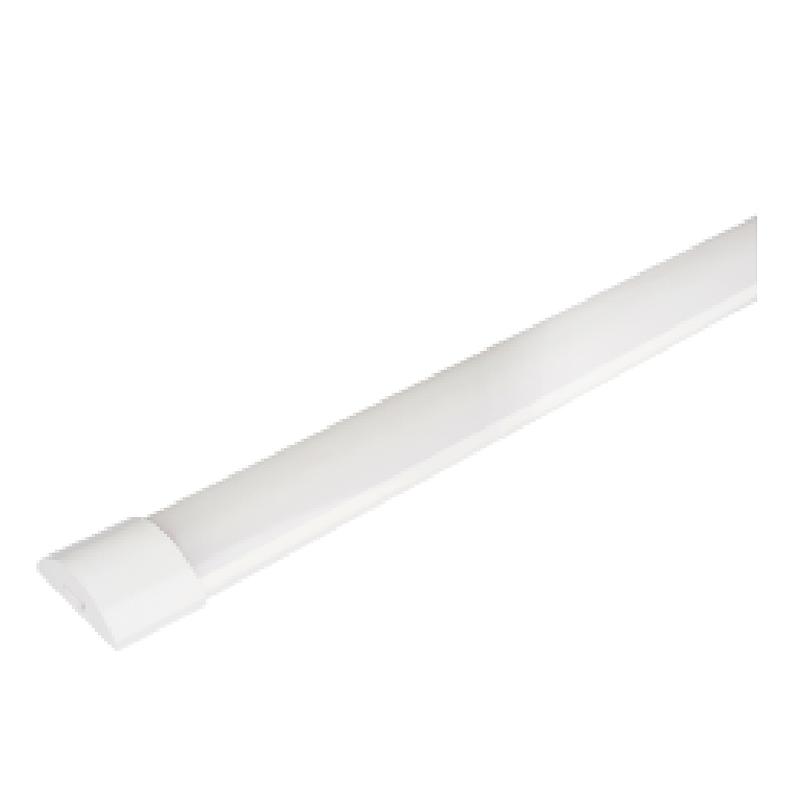 3CCT LED Batten Light with Selectable Color TemperatureThis batten light offers 3000K, 4000K, or 6500K options, allowing installers to choose the output at the junction box. Its flexibility suits varied spaces like offices, warehouses, and corridors without requiring separate orders.View Product →
That flexibility matters: the same line can serve an office upgrade, a warehouse aisle, or a school corridor—without making the warehouse manager commit to a color before seeing the final space.
Retail, Jewelry, and Accent Areas
For food counters, clothing displays, jewelry cases, and shelf lighting, a tighter CCT range of 3000K to 3500K is usually balanced with CRI 90 and above. In jewelry or cosmetics, the color of diamonds, metal, and skin can be altered by a small shift in both Kelvin and CRI. A standard GU10 with multiple beam angles and wattage options is useful here: the lighting designer can tune the beam for a shallow shelf or a tall window display without changing the fixture type.
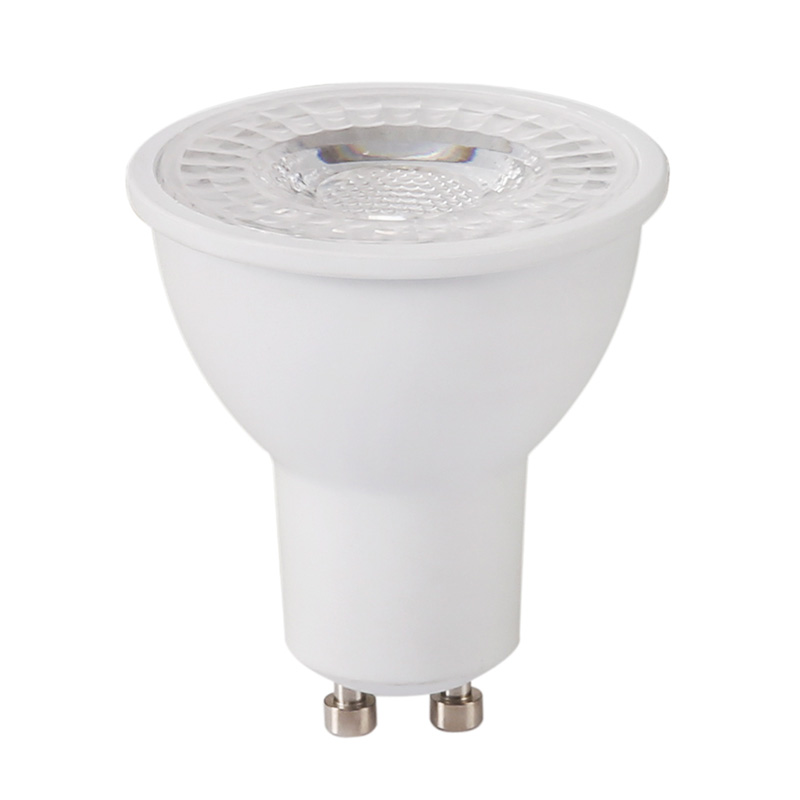 Standard GU10 LED Lamp Cup with Multiple Beam AnglesAvailable in 3W to 9W with beam angles from 38° to 120°, this GU10 lamp cup provides high CRI options and tunable CCTs, making it ideal for retail displays where color accuracy and beam control matter.View Product →
When the focus is on merchandise rather than room ambience, a 3000K source with high CRI will usually outperform a 4000K source with low CRI, even though the latter appears brighter on paper.
Why CCT-Adjustable Luminaires Are a Practical Buying Choice
If a project is still under design review or the end user is unsure of their preference, the safest investment is a CCT-adjustable fixture. This is especially true for distributors and wholesalers who must manage stock across multiple countries and installation cultures.
Three concrete benefits stand out:
- On-site switching prevents rework: an electrician can set 3000K, 4000K, or 5000K during the final commissioning phase.
- Lower inventory risk: one SKU covers multiple preferences, so dead stock is less likely.
- Better project response: the same downlight model can serve a hotel corridor and a retail store, which matters when lead times are short.
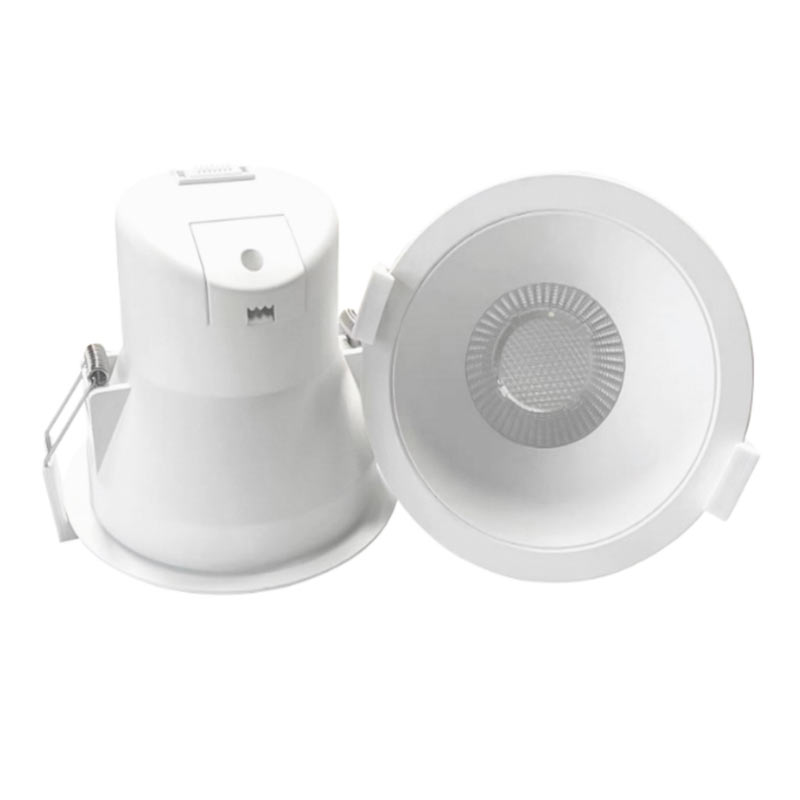 3CCT 7W/9W LED Downlights with Wall-Switch TuningThese downlights feature 3-step CCT switching (3000K/4000K/5000K) via wall switch, with CRI ≥80 and anti-glare beam. Compact sizes fit common ceiling cutouts, offering discreet control for various installations.View Product →
A 7W or 9W downlight in this configuration is a common example. It is compact, fits most ceiling cutouts, and the switch mechanism is usually discreet enough to avoid cluttering the fixture face.
Purchase Considerations: Color Temperature, CRI, and Tolerance
Before finalizing a specification, review these four factors with your supplier.
- Color tolerance and binning: two batches with the same nominal Kelvin can look different side by side. Ask for the SDCM value (MacAdam ellipse) and request a shipping sample from the same production lot.
- CRI trade-offs: high CRI often comes with a small efficiency penalty. That is acceptable for retail, but for industrial areas with high ceiling mounting, a CRI 80 4000K source may be the better overall balance.
- Dimmer compatibility: if using TRIAC dimming, confirm that the color temperature remains stable at lower output. Some drivers shift toward warm as they dim, which is a design feature or a drawback depending on the room.
- Optic and lens effects: plastic-aluminum hybrid housings, PC covers, and glass lenses all affect the final color. The Kelvin printed on the box is measured without the fixture; the actual delivered light may differ.
In our experience, the only reliable way to settle these variables is to test a sample in the actual environment. If you are working with an OEM or ODM manufacturer, the supplier should be able to adjust the LED board and optics to match a reference sample from your current product line.
For insight into downlight selection, the guide on choosing and installing LED downlights covers cutout sizes, wattage, and mounting details. If you need a specific CCT or a custom beam angle for your project, contact our engineering team with the target sample or blueprint.
A Practical Final Rule
Use the Kelvin scale as a directional tool, not a verdict. A living room at 2700K, an office at 4000K, and a retail display at 3500K are all correct choices when they match the activity. For maximum flexibility in changing spaces, ask for CCT-adjustable drivers or multi-wattage options. Then spend your remaining energy on layout, beam angle, and glare control—because a perfectly chosen color temperature will still fail if the light shines at the wrong place.
