
 English
 中文简体
中文简体 عربى
عربى Español
Introduction to LED Ceiling Lights LED ceiling lights have become a popular choice for modern homes,...
Content
- 1 What Are Halogen AR Lamps and Why Replace Them?
- 2 Step 1 — Identify Your Existing AR Lamp Type
- 3 Step 2 — Check Your Transformer or Driver Compatibility
- 4 Step 3 — Verify Dimmer Switch Compatibility
- 5 Step 4 — Select the Correct LED AR Lamp
- 6 Step 5 — Install the LED AR Lamp
- 7 Troubleshooting After Replacement
- 8 Cost Savings: What to Expect After Switching
- 9 Quick Compatibility Checklist Before You Buy
Yes, you can replace halogen AR lamps with LED equivalents in most fixtures — but compatibility depends on three factors: base type, driver/transformer compatibility, and dimmer switch type. Get all three right and you will cut energy consumption by up to 80%, eliminate frequent bulb changes, and reduce heat output dramatically. Get any one wrong and you will face flickering, buzzing, premature failure, or a lamp that simply will not turn on. This guide walks through every step so you avoid the most common mistakes and make the switch correctly the first time.
What Are Halogen AR Lamps and Why Replace Them?
AR lamps — short for Aluminized Reflector — are directional bulbs with a built-in parabolic reflector that focuses light into a precise beam. The number following "AR" indicates the bulb diameter in eighths of an inch: an AR111 is 111⁄8 inches (approximately 138mm) in diameter; an AR70 measures 70⁄8 inches (about 89mm). They are widely used in retail display lighting, gallery track systems, hospitality accent lighting, and residential recessed fixtures.
Halogen AR lamps have been a professional standard for decades, but they carry significant drawbacks that LED replacements solve directly:
- High energy consumption: A standard halogen AR111 runs at 50W–75W. An LED AR111 equivalent delivers the same lumen output at just 10W–15W.
- Excessive heat: Halogen AR lamps convert roughly 90% of consumed energy into heat. In a retail store with 30 fixtures running 12 hours a day, this adds meaningful air conditioning load and increases fire risk near displays.
- Short lifespan: Halogen AR lamps last approximately 2,000–4,000 hours. LED AR lamps last 25,000–50,000 hours — up to 25× longer, dramatically reducing replacement labor costs in commercial settings.
- UV and IR emission: Halogen lamps emit ultraviolet and infrared radiation that fades artwork, textiles, and merchandise over time. LED AR lamps emit negligible UV and IR.
- Regulatory phase-out: Halogen lamps have been banned or are being phased out across the EU, UK, and several other markets as part of energy efficiency legislation.
Step 1 — Identify Your Existing AR Lamp Type
Before purchasing any LED replacement, you need four pieces of information from your existing halogen lamp. Check the lamp itself or the fixture label.
AR Size (Diameter)
The most common sizes are:
- AR111 — 138mm diameter. The most widely used size in professional track and recessed fixtures. Also called QR111 or ES111.
- AR70 — 89mm diameter. Common in smaller track heads and compact display fixtures.
- AR48 — 61mm diameter. Less common; used in miniature accent fixtures.
Base / Cap Type
AR lamps use one of two base types:
- G53 — Two pins, 53mm apart. The standard base for AR111 lamps. Connects directly to a 12V low-voltage transformer or an electronic driver.
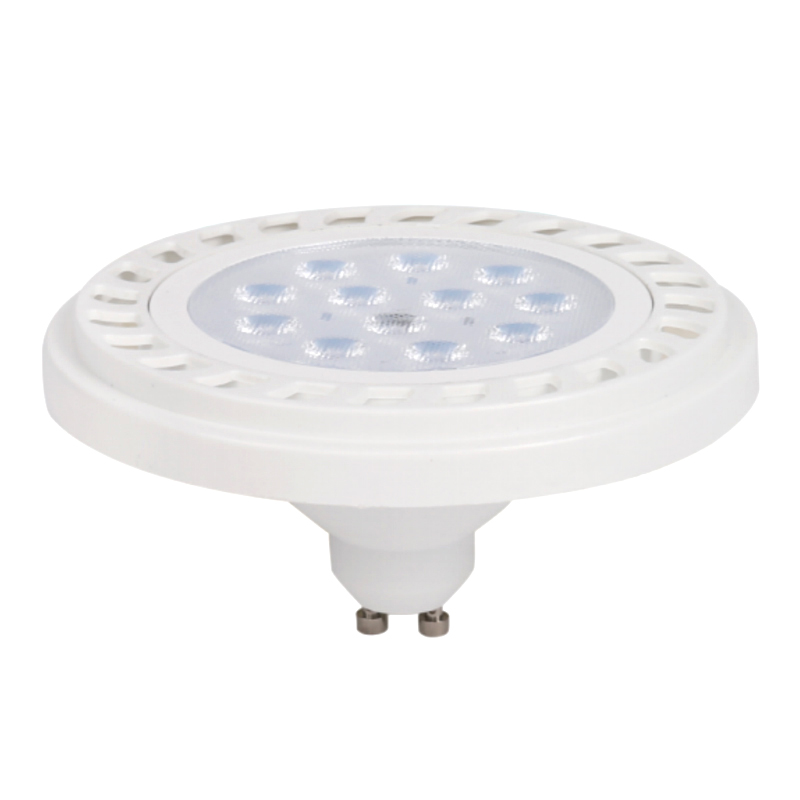
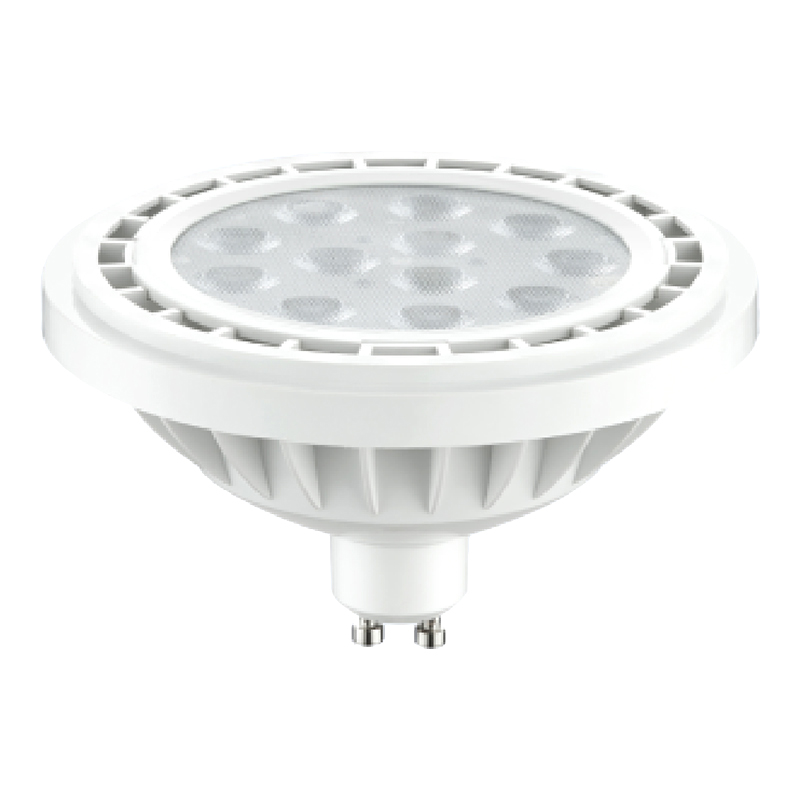
- GU10 — Two pins with bayonet-style twist lock. Some AR111 and AR70 lamps use GU10 bases and connect directly to 230V mains (no transformer required).
This base type is the most critical detail. A G53-based LED AR111 requires a compatible 12V driver. A GU10-based LED AR111 plugs directly into mains voltage. Mixing these up will damage the lamp or the fixture.
Wattage and Voltage
Note the wattage printed on the existing halogen lamp (commonly 35W, 50W, or 75W) and the supply voltage (12V for G53 low-voltage systems; 230V/120V for GU10 mains-voltage systems). You will use this to select the correct LED equivalent and verify driver compatibility.
Beam Angle
AR lamps are available in multiple beam angles — typically 8°, 15°, 24°, 36°, or 60°. Record the beam angle from the existing lamp so you can match it precisely in the LED replacement. Switching from a 24° halogen to a 36° LED will noticeably change the light distribution on your display or artwork.
Step 2 — Check Your Transformer or Driver Compatibility
This is where most halogen-to-LED replacement projects run into trouble. Many existing halogen AR111 installations use a magnetic (iron core) transformer or an electronic transformer designed specifically for the higher wattage loads of halogen lamps. LED lamps draw far less current, and many older transformers cannot operate correctly at these low loads.
Magnetic Transformers
Magnetic transformers typically have a minimum load requirement of 20W–40W. If you replace a 50W halogen with a 10W LED, the transformer may hum, flicker, or fail to start because the LED load is below its minimum operating threshold. In this scenario, you have two options:
- Replace the magnetic transformer with a dimmable LED driver rated for low-wattage loads (available from around $15–$40 per unit).
- Use an LED AR111 lamp specifically labeled "magnetic transformer compatible" — some LED lamps include internal circuitry that simulates a higher load to satisfy the transformer's minimum requirement.
Electronic Transformers
Electronic transformers are more likely to be compatible with LED lamps, but still require checking. Look for the transformer's minimum and maximum load rating on the unit label. The LED lamp's wattage must fall within this range. Many electronic transformers designed for halogen are rated 10W–60W minimum, which a single 10W LED AR111 may not satisfy.
Purpose-Built LED Drivers
The cleanest long-term solution for any G53-based AR111 installation is to replace the existing transformer with a purpose-built constant-voltage LED driver rated at 12V DC. These drivers have no minimum load restriction, are compatible with dimmable LED lamps, and typically cost $15–$50 — a one-time investment that eliminates compatibility issues entirely.
| Transformer Type | LED Compatible? | Common Issue | Recommended Action |
|---|---|---|---|
| Magnetic (iron core) | Rarely | High minimum load; hum or flicker | Replace with LED driver |
| Electronic (halogen) | Sometimes | Minimum load not met; flickering | Check load range; replace if needed |
| LED driver (12V DC) | Yes | None (purpose-built) | Ideal solution; use this |
| Mains voltage (GU10) | Yes | Dimmer compatibility only | Check dimmer switch type |
Step 3 — Verify Dimmer Switch Compatibility
If your halogen AR lamps are on a dimmer circuit — which is common in hospitality, retail, and residential accent lighting — dimmer compatibility is the second most common cause of problems after transformer issues.
Halogen dimmers work by reducing voltage using a TRIAC or leading-edge phase-cut method. Most LED drivers and lamps use a different internal circuit that does not respond well to this voltage-cutting approach. The result is typically one or more of the following:
- Flickering at low dimmer settings
- Audible buzzing from the lamp or driver
- Limited dimming range (lamp only dims to 30–40% before dropping out completely)
- Lamp failing to turn on at lower dimmer positions
Dimmer Types and LED Compatibility
- Leading-edge (TRIAC) dimmers — Designed for resistive and magnetic loads (incandescent, halogen). Often incompatible with LED unless the LED lamp is specifically labeled "leading-edge compatible." This is the most common type in older installations.
- Trailing-edge (ELV) dimmers — Designed for electronic loads. Generally more compatible with LED lamps and drivers. Produces smoother dimming with less flicker. Recommended for new LED AR lamp installations.
- 0–10V dimmers — Used in commercial installations with compatible LED drivers. Provides the smoothest, most reliable dimming range from 1–100%. Standard in professional retail and hospitality lighting systems.
- DALI dimmers — Digital addressable lighting interface; allows individual fixture control via a digital protocol. Found in large commercial installations. Requires DALI-compatible LED drivers.
If you are keeping existing dimmers, check the LED lamp or driver manufacturer's compatibility list — most reputable brands publish a list of tested dimmer models. If your dimmer is not on the list, replacing it with a trailing-edge LED dimmer (typically $20–$60) is the most reliable fix.
Step 4 — Select the Correct LED AR Lamp
With your existing lamp specifications confirmed and transformer/dimmer compatibility addressed, selecting the right LED replacement comes down to matching five key parameters:
Lumen Output (Not Wattage)
Do not try to match wattage — match lumen output. A 50W halogen AR111 typically produces 700–900 lumens. An LED AR111 replacement should deliver the same lumen range at approximately 10W–12W. The table below provides standard equivalents:
| Halogen AR111 Wattage | Approx. Lumen Output | LED Equivalent Wattage | Energy Saving |
|---|---|---|---|
| 35W | 400–500 lm | 6W–8W | ~77% |
| 50W | 700–900 lm | 10W–12W | ~80% |
| 75W | 1,100–1,300 lm | 14W–18W | ~80% |
Beam Angle
Match the beam angle of the existing halogen lamp exactly. LED AR111 lamps are available in 8°, 15°, 24°, 36°, and 60° beam angles. In accent and retail lighting, even a 10° difference in beam angle will visibly change where the light falls and how dramatic the contrast is between lit and unlit areas.
Color Temperature and CRI
For retail and gallery applications, choose 3000K with CRI 90+ as the baseline, or CRI 95+ if accurate color rendering of artwork, clothing, or food is critical. For hospitality and residential accent lighting, 2700K–3000K provides the warm, flattering tone that halogen was traditionally valued for. Avoid going above 4000K for any accent lighting application.
Dimmability
If the circuit uses a dimmer, ensure the LED lamp is explicitly labeled "dimmable". Non-dimmable LED lamps connected to a dimmer circuit will flicker, buzz, or fail prematurely — even if the dimmer is left at full output.
Integrated vs. Non-Integrated Driver
LED AR lamps come in two driver configurations:
- Integrated driver (self-contained) — The driver is built into the lamp body. Easier to install; simply replaces the halogen directly. Slightly harder to service if the driver fails.
- External driver (remote driver) — Requires a separate LED driver installed in the fixture or ceiling void. More flexible for dimming control and longer lamp lifespan since heat-sensitive driver components are kept away from the lamp head.
Step 5 — Install the LED AR Lamp
Always switch off power at the circuit breaker before handling any lamp or transformer. AR111 lamps operate at higher voltages or involve transformer wiring — do not rely on the wall switch alone.
- Turn off the circuit breaker supplying the lighting circuit. Verify the power is off using a non-contact voltage tester before touching any wiring.
- Allow the halogen lamp to cool for at least 10–15 minutes. Halogen AR lamps run at extremely high surface temperatures — touching a hot lamp can cause burns and the thermal shock of removing a hot lamp can crack the reflector.
- Remove the halogen AR lamp from the fixture. G53-based lamps pull straight out from the socket. GU10-based lamps rotate approximately 60° counterclockwise then pull free.
- If replacing the transformer with an LED driver, disconnect the transformer wiring from the fixture, note the connections (Live, Neutral, and the 12V output wires to the lamp socket), and connect the LED driver in the same wiring positions. Secure the driver in the ceiling void or fixture housing.
- Insert the LED AR lamp into the socket. G53: align the two pins and press firmly until the lamp seats securely. GU10: align the pins with the socket notches, push in, and rotate clockwise approximately 60° until it locks.
- Restore power at the circuit breaker and test the lamp at full brightness. If the lamp lights without issue, proceed to test dimming if applicable.
- Test dimming across the full range. The lamp should dim smoothly from 100% down to its minimum rated level (typically 5–10% for quality dimmable LED AR lamps) without flickering, buzzing, or dropping out.
- Adjust beam direction if the fixture has an adjustable head. LED AR lamps produce a slightly different beam profile than halogen — the center hotspot may be more defined. Re-aim the fixture as needed to achieve the intended accent lighting effect.
Troubleshooting After Replacement
If the LED AR lamp does not perform correctly after installation, use this checklist to identify the cause:
Lamp Flickers or Flashes
Most commonly caused by transformer incompatibility (load too low for the transformer's minimum) or dimmer incompatibility. First, test with the dimmer at full output — if flickering stops, the dimmer is the issue. If flickering continues at full output, the transformer is likely the cause. Replace with an LED-compatible driver or a dimmable LED driver respectively.
Lamp Does Not Turn On
Check that the lamp is correctly seated in the socket. For G53 lamps, a partial connection is common if the pins are not fully engaged. If seating is correct, verify the transformer or driver output voltage with a multimeter — it should read 12V DC (for LED drivers) or 12V AC (for compatible electronic transformers). No output voltage indicates a transformer or driver fault.
Lamp Buzzes Audibly
Buzzing almost always indicates dimmer incompatibility. The TRIAC switching of a leading-edge dimmer creates audible interference in LED drivers not designed for this signal. Switch to a trailing-edge dimmer or a 0–10V dimming system with a compatible LED driver.
Lamp Dims to a Limited Range Only
If the lamp only dims to approximately 30–40% before shutting off, the dimmer's minimum load threshold is being triggered. LED-specific dimmers have a lower minimum load threshold than halogen dimmers. Replace the dimmer with a model from the LED lamp manufacturer's compatibility list.
Cost Savings: What to Expect After Switching
The financial case for replacing halogen AR lamps with LED is straightforward. Consider a retail store with 20 halogen AR111 fixtures running 12 hours per day:
- Halogen energy cost: 20 fixtures × 50W × 12 hrs × 365 days = 4,380 kWh/year
- LED energy cost: 20 fixtures × 10W × 12 hrs × 365 days = 876 kWh/year
- Annual energy saving: 3,504 kWh — at $0.15/kWh this equals $525/year in electricity savings
- Lamp replacement saving: Halogen AR111s last ~2,000 hrs and cost $5–$12 each. Over 4,380 annual hours, each halogen requires ~2 replacements/year. LED AR111s last 25,000–50,000 hours — zero replacements needed for 5–10 years.
For most commercial installations, the combined energy and maintenance savings deliver a full return on investment — including driver replacement costs — within 12–24 months.
Quick Compatibility Checklist Before You Buy
Run through this checklist before purchasing any LED AR lamp replacement to avoid returns and compatibility issues:
- Confirmed AR lamp size (AR111, AR70, or AR48)
- Confirmed base type (G53 or GU10)
- Confirmed supply voltage (12V low-voltage or 230V/120V mains)
- Confirmed existing transformer type and minimum load rating
- Confirmed dimmer type (leading-edge, trailing-edge, 0–10V, or DALI)
- Matched lumen output to existing halogen (not just wattage)
- Matched beam angle exactly (8°, 15°, 24°, 36°, or 60°)
- Selected correct color temperature and CRI for the application
- Confirmed LED lamp is labeled "dimmable" if used on a dimmer circuit
- Verified LED lamp or driver is on the dimmer manufacturer's compatibility list
